Last updated: August 10, 2026
- The avalanche method (highest interest rate first) minimizes total interest paid and is mathematically optimal when rates differ significantly.
- The snowball method (lowest balance first) produces faster early wins; behavioral research published in the Journal of Marketing Research found that account-elimination focus improves debt-payoff completion rates.
- When interest rates are clustered within a narrow band, the financial difference between avalanche and snowball is modest — behavior and consistency matter more.
- A hybrid approach — avalanche on a single high-rate outlier, then snowball on remaining balances — captures the best of both methods.
- Consolidation and balance transfers are tools, not solutions; they work only when paired with a strict payoff plan.
- A small emergency fund before aggressive payoff begins reduces the risk of undoing progress with a single unexpected expense.
- Payoff sequencing is not a substitute for debt restructuring when the debt load is too large relative to income.
Most people carrying multiple debts pay them all down simultaneously — a vague, unfocused approach that feels responsible but quietly costs years and thousands of dollars. The real question isn’t whether to pay off debt; it’s which debt to attack first, and how to stay committed to that order when life gets messy. This guide answers that directly.
Honestly, I’ve spent a long time studying the mathematics of debt amortization and watching real households succeed and fail with different approaches. Not spreadsheet people — actual humans dealing with impulse buys, car repairs, and the occasional month where everything falls apart at once. Because amortization works against you in ways that are invisible month to month but devastating over years, the sequence genuinely matters more than most people realize.
The frameworks here aren’t theory. They’re the approaches with the clearest evidence behind them. This guide is for anyone carrying two or more debts who genuinely doesn’t know where to aim their extra money. A direct answer is coming.
The Real Difference Between the Avalanche and the Snowball — and How to Choose the Right Payoff Strategy
This is the central debate in personal debt strategy, and I’ll spare you seventeen Reddit threads: the avalanche wins mathematically, the snowball wins psychologically. Not a cop-out — the accurate, honest answer — and what it hinges on is you.
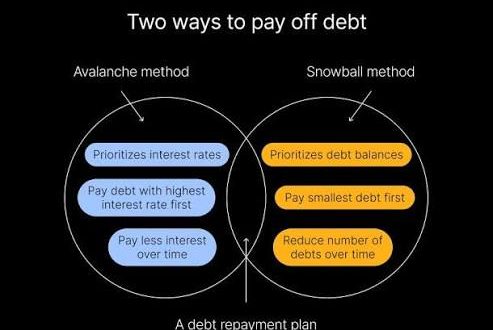
Avalanche (highest interest rate first): List your debts by interest rate, pay minimums on everything, and throw all extra money at the highest-rate balance. Once it’s gone, cascade that payment down to the next highest rate.
Snowball (lowest balance first): List debts by balance size, pay minimums on everything, and throw all extra money at the smallest balance. Roll that freed payment to the next smallest once it’s cleared.
Almost every realistic scenario has the avalanche saving more money and retiring debt faster in calendar time. The savings can be significant — depending on your rates and balances, the difference can span years of extra payments.
The snowball, though, generates quick wins. Accounts disappear. The number of debts shrinks. Research by behavioral economists Moty Amar, Dan Ariely, and colleagues — published in the Journal of Marketing Research — found that people focused on eliminating individual accounts were more likely to actually get out of debt than those focused on minimizing interest charges. Crossing a debt off the list is not trivial. It’s what keeps people doing the thing.
Three times starting a debt payoff plan, twice abandoning it? The snowball’s momentum matters more to you than its math deficit.
But stay disciplined even when a balance barely moves for months, and the avalanche is the more efficient machine — no question.
The Avalanche: Who Should Actually Use This (and Who Shouldn’t)

Consider a credit card carrying a high APR — the kind common on retail cards or older accounts — with a balance in the thousands. Every month that balance survives, you’re paying a meaningful chunk in pure interest charges. The avalanche addresses that bleed directly, which is why it’s the right choice when your highest-interest debt also carries a large balance.
Where it genuinely wins:
- Credit card debt sitting at significantly higher rates than everything else. A spread between your highest-rate and lowest-rate debt — say, 24% versus 6% — gives the avalanche a large efficiency advantage.
- Long-duration debts. The longer the timeline, the harder compounding works against you, and the more the avalanche’s interest savings stack up in your favor.
- Number-driven motivation. Some people find it genuinely energizing to watch the total interest projection shrink on a spreadsheet. For those folks, the avalanche keeps engagement high.
- A financial partner who is equally committed, which reduces the need for motivational shortcuts.
Real weaknesses, with real consequences:
Patience is the avalanche’s Achilles heel. A highest-rate debt that also happens to be your largest balance means grinding away at the same account for a year or two before seeing it eliminated — and during that stretch, your list of debts never shrinks. No dopamine hit of paying off an account. For many people (research suggests this is the majority, not a minority) that grind quietly kills the plan.
There’s also a cash-flow consideration: high minimum payments on the highest-rate debt may leave less flexibility to pile on extra money, which narrows the avalanche’s practical edge.
Who should skip the avalanche:
A history of starting and abandoning financial plans means the avalanche is fighting your psychology. The mathematically superior strategy you don’t maintain is worth less than an imperfect one you actually execute. And when debts are clustered at similar rates, the avalanche’s advantage shrinks — a behavioral quick win may outweigh a rate difference like 18% versus 19%.
The Snowball: The Specific Situations Where It Wins
Behavior, not math, is where the snowball wins. And in personal finance, behavior is the game.
Eliminating a debt account entirely changes how you see your financial situation. Five debts become four, then three. That reduction in the number of obligations feels like progress in a way that a declining balance on a single large account simply doesn’t produce.
Where the snowball is clearly the right call:
- Early recovery from a spending or debt spiral. The sense of progress and agency from paying off small debts is genuinely therapeutic — and practically reinforcing. The snowball gives you evidence that you’re capable of winning.
- Small debts scattered across multiple cards you keep accidentally overspending on. Eliminating those accounts removes the temptation and the cognitive overhead at the same time.
- Rates that don’t vary widely. When balances are sitting within a narrow rate band, the mathematical cost of choosing the snowball stays modest — you sacrifice relatively little efficiency in exchange for real motivational benefit, though the exact tradeoff depends on your specific balances and timeline.
- Working alone, without external accountability, where sustaining your own motivation matters most.
Cost is the snowball’s weak spot. Paying minimums on an expensive high-rate debt while eliminating a cheap low-rate one costs real money. The less dramatic the rate spread, the smaller the penalty — but in extreme cases, a snowball strategy against high-rate large balances can burn a significant amount in avoidable interest over the life of the debt.
A false sense of completion is another trap. Someone who eliminates four small debts but still carries one massive high-interest balance hasn’t solved their problem — they’ve streamlined it. Without the same focused attention on that remaining large balance, the strategy produces wins without producing freedom.
Who should skip the snowball:
One debt with a dramatically higher rate than everything else, and it carries a large balance? The math penalty is too steep to ignore. That’s exactly the scenario where the hybrid approach — described below — is the better move.
The Honest Side-by-Side

| Criteria | Avalanche | Snowball | Better for… |
|---|---|---|---|
| Total interest paid | Lower | Higher | Avalanche |
| Speed of debt elimination (calendar) | Faster (mathematically) | Slower | Avalanche |
| Number of early “wins” | Fewer | More | Snowball |
| Motivation and adherence | Harder to maintain | Easier to maintain | Snowball |
| Best with wide rate spread | Yes | No | Avalanche |
| Best with similar rate spread | Marginal advantage | Roughly equivalent | Either |
| Works for habit-formers and recovering spenders | Poorly | Well | Snowball |
| Works for analytical, plan-adherent personalities | Well | Less necessary | Avalanche |
| Simplicity | Moderate | High | Snowball |
| Risk of abandonment mid-plan | Higher | Lower | Snowball |
One row worth emphasizing: rates bunched close together shrink the avalanche’s mathematical advantage significantly. The case for the snowball gets stronger the more similar your rates are — because at that point you’re trading a small math penalty for a real, documented behavioral benefit.
Two Strategies the Mainstream Conversation Ignores — and Why They Matter for Choosing the Right Payoff Strategy
Most debt payoff articles stop at avalanche vs. snowball. Several approaches get left out entirely — approaches that, depending on your situation, may outperform both.
The Hybrid (High-Rate Elimination + Snowball Cascade):
Underrated. Full stop. Identify any debt with a rate meaningfully above the rest — often a single credit card or a payday loan. Treat that as your first target regardless of balance size, because the ongoing cost of that rate is large enough to justify the math priority. (For complex situations or large debt loads, a nonprofit credit counselor — such as those accredited through the National Foundation for Credit Counseling — can help confirm which debt deserves that priority.) Once the outlier is gone, switch to snowball sequencing for everything remaining. The efficiency gain comes where it matters most; then the motivational benefit of quick wins takes over on the lower-stakes balances.
Say you have one card at 28% and everything else sitting between 14–18%. That outlier card deserves priority on pure math grounds. After it’s cleared, the remaining debts are close enough in rate that snowball mechanics make behavioral sense — and that shift from avalanche logic to snowball logic is really the practical core of what the hybrid does.
The Cash-Flow Consolidation:
Not a payoff sequence strategy, but worth naming as a prerequisite. Minimum payments consuming most of your monthly cash mean you can’t build a meaningful extra payment — a structural trap that exists before sequencing even applies. Consolidating into a lower-rate personal loan or moving balances to a 0% promotional APR card can reduce the monthly drain and free up cash to actually attack the principal — a dynamic the Consumer Financial Protection Bureau describes as a legitimate use of consolidation tools. The risk — and it’s a real one — is behavioral: people who consolidate without changing the habits that generated the debt often re-accumulate balances on the cards they just zeroed out. Consolidation is a tool, not a solution. Paired with a strict payoff plan, it works. Used as breathing room to resume spending, it backfires.
The Emergency Fund First Rule:
Almost everyone underweights this one. No emergency fund, with every extra dollar going toward debt, means a single car repair away from putting that car repair back on a credit card — undoing months of progress in one event. Most sound financial guidance suggests keeping a small liquid emergency fund (the size depends on your income stability and fixed obligations) before aggressive debt payoff begins. A financial counselor can help calibrate the right number for your situation.
Verdict: Which One to Choose and Why
Choose the avalanche if one or two debts carry significantly higher rates than the rest, you have a track record of actually following through on financial plans, and efficiency metrics motivate you more than milestone satisfaction does.
Choose the snowball if previous debt payoff attempts stalled out before the finish, if rates are clustered within a tight range of each other, or if you’re in the early stage of changing your financial behavior and need wins to sustain momentum.
Choose the hybrid if one clear outlier high-rate debt exists alongside a spread of smaller, lower-rate balances. Eliminate the outlier first on pure math grounds, then shift to snowball mechanics for what remains.
Neither, if total debt load is so large relative to income that no payoff sequence changes the arithmetic materially — in that case, a structural solution comes first. That might mean debt consolidation, working with a nonprofit credit counseling agency, or in serious situations, speaking with a bankruptcy attorney. Payoff sequencing works for people who can, with discipline, work their way out. It’s not a substitute for restructuring when restructuring is what the situation actually requires.
Worked Example: Same Debts, Three Strategies
Take three debts: a $500 medical bill at 0% interest, a $3,000 credit card at 22% APR, and a $7,000 car loan at 6% APR. Monthly extra cash available after minimums: $200.
Snowball sequence: Attack the $500 medical bill first. Gone in roughly three months. Then cascade $200 plus the freed medical payment to the credit card, then the car loan.
Avalanche sequence: The $3,000 credit card at 22% goes first. The medical bill sits at 0% — no interest cost — while you clear the expensive card. Once the card is gone, cascade to the car loan. The medical bill gets its minimum the whole time but costs nothing to delay.
Hybrid (appropriate here): The 22% card is a clear outlier. Attack it first, using avalanche logic. After it’s cleared, the remaining debts sit at 0% and 6% — at that point, snowball mechanics make sense because the medical bill eliminates faster and there’s no meaningful rate penalty for doing so.
Here the hybrid and avalanche produce similar financial outcomes. The snowball costs some additional interest by delaying the 22% card — the exact gap depends on repayment timeline and minimum payment structure, but the direction is consistent: the 22% card deserves early attention regardless of its balance size relative to the car loan.
When to Reconsider This Choice Entirely
Three situations where the avalanche/snowball framing becomes the wrong question:
1. You’re underwater on a secured asset. Owing more on your car than it’s worth while the payment strains your budget? No payoff sequence solves the underlying problem. Options like selling the asset, refinancing, or renegotiating the loan may need to come first — and because these decisions involve complex tradeoffs specific to your situation, speaking with a nonprofit credit counselor or financial advisor before acting is worth the time. The NFCC’s member directory can help you find a low-cost or free counseling option.
2. Your income is unstable. Aggressive debt payoff requires predictable surplus cash. Freelance work, commission, seasonal employment — that kind of income fluctuation may mean building a larger liquid cushion first, then moving to aggressive payoff during high-income months. Locking into a rigid plan against a volatile income creates exactly the scenario where one missed payment cascades into penalties and derails everything.
3. The interest rate environment changes your calculus. Low-rate debt — a mortgage at a rate meaningfully below what a safe liquid savings account pays — weakens the math of aggressive payoff. Making minimum payments on that debt while directing surplus cash toward savings or investments may be the smarter call; this is a personal, situation-specific decision, and consulting a financial advisor before acting is worth considering. The general principle: aggressive payoff is clearest when the debt rate is high; it gets genuinely ambiguous when the rate is low.
4. You’ve been living on credit cards. Extra cash going toward debt payoff while still using credit cards for regular expenses — and not fully paying them monthly — means filling a leaking bucket. The payoff strategy is irrelevant until the spending pattern changes. A zero-based budget or envelope system often helps more in that situation than any debt sequencing framework.
How to Actually Start Choosing the Right Payoff Strategy This Week
Choosing the wrong strategy isn’t the most common failure mode. Spending three weeks researching strategies and never picking one — that’s what actually kills people’s plans.
Here’s how to cut through that:
List every debt. For each one, note the current balance, the minimum monthly payment, and the interest rate. Don’t know the rate? Look it up — it’s on your statement or in your online account.
Then make one decision: are rates grouped (within a narrow range of each other) or is there a clear outlier? Grouped rates mean snowball. An outlier means avalanche or hybrid.
Next, set up automatic minimum payments on every account except the target. Direct every dollar of extra monthly cash to that target. Put a calendar reminder three months out to review progress and confirm the plan still fits your situation.
Done. The strategy that works is the one executed consistently for eighteen months — not the one that looked best on a spreadsheet on a Sunday afternoon. Make the call, set it up, and let it run.
As with any financial decision affecting significant sums or involving complex situations, consulting a certified financial counselor or planner is worth considering — especially when navigating debt alongside variable income, a major life change, or secured debt.