Last updated: August 10, 2026
- The debt snowball method orders debts by balance, smallest first — not by interest rate.
- Its primary advantage is behavioral: early wins build motivation to continue repayment.
- The competing method, the debt avalanche, minimizes total interest paid but delays early wins.
- The snowball works only if there is budget margin to make extra payments; it does not create money.
- Best suited to people with multiple accounts and a history of abandoning repayment plans.
- Anyone with debts in collections, facing legal action, or carrying very high-rate loans should consult a nonprofit credit counselor before choosing a repayment sequence.
Sixty-three percent of Americans carrying credit card debt make only the minimum payment each month — and most of them know it’s a trap. The debt snowball method exists for exactly that situation. List your debts from smallest balance to largest, cover the minimums across every account, then throw every spare dollar at the smallest one. Once that’s cleared, redirect that payment to the next-smallest debt. Repeat until you’re done.
Why sequencing by balance — rather than by interest rate — is the entire design choice: that’s the real subject here. Understanding how the debt snowball method works step by step means understanding not just the mechanics, but why payment order produces results in cases where pure arithmetic has already failed.
This article explains how a debt repayment strategy works. Nothing here is financial advice. Your situation — your interest rates, your income stability, your other obligations — is specific to you, and a qualified financial adviser or nonprofit credit counselor can give guidance tailored to it.
Why the Order of Payments Is the Whole Point
Most people in debt are not confused about what they owe. They know. What breaks them is the feeling that nothing is moving — making minimum payments on six accounts for eighteen months while the balances barely budge is psychologically corrosive. People stop looking at the statements. They stop opening the envelopes.
Minimum payments, month after month, with no visible finish line: that’s precisely what the debt snowball method is designed to interrupt. Repayment gets sequenced to produce early wins, deliberately. You pay off the smallest balance first not because it saves the most money, but because crossing a debt off the list changes how you feel about the process — and feeling like you’re winning is what keeps you in the game.
This framing matters enormously, because the most common criticism of the snowball is that it’s mathematically inferior to the avalanche method, where you attack the highest-interest debt first. Often true, in terms of total interest paid. Even so, math doesn’t help if you abandon the plan in month four because nothing feels like progress.
How the Debt Snowball Method Works: The Exact Steps
Step 1: List every debt with its current balance and minimum payment.
Include everything: credit cards, personal loans, medical bills, student loans, money owed to family. Leave out your mortgage for now — the snowball is generally used for consumer and unsecured debt, though some people extend it further. Mortgage debt involves different legal structures and tax implications; consult a licensed financial adviser before applying any consumer debt strategy to a secured loan. The Consumer Financial Protection Bureau has free guidance on understanding different debt types.
Step 2: Order them by balance from smallest to largest.
Not by interest rate. Not by which one stresses you out most. Strictly by outstanding balance. A smaller balance goes ahead of a larger one regardless of rate — the sequencing is intentionally divorced from the rate question. (For a comparison of when rate-first ordering makes more sense, see the avalanche section below.)
Step 3: Cover the minimums on everything except the smallest debt.
Non-negotiable. Skipping payments on larger debts to accelerate the small one damages your credit and can trigger fees and penalties that work against you.
Step 4: Direct every dollar you can free up toward the smallest debt.
Here’s where most articles stop at “make extra payments” without acknowledging that extra money has to come from somewhere. Either cut spending, raise income, or both — there’s no version of this that works without a budget behind it. The snowball is a repayment strategy, not a budgeting strategy; you need both.
Step 5: When the smallest debt is paid off, don’t adjust your lifestyle.
Take the full minimum you were paying on that now-eliminated debt, add it to what you’re already sending to the next-smallest, and direct the combined amount there. Each eliminated debt makes the rolling payment bigger — that’s the snowball effect.
Once the list is cleared of that account, move straight up to the next one.
Every cleared account frees up more cash flow for the next one. A snowball that started as a $50 minimum on a small credit card can become a $400-per-month payment by the time you reach the second-to-last debt on your list. The math gets better as you go.
A Concrete Example of the Debt Snowball Method in Practice
The figures below are illustrative — your own timeline depends on your specific balances and interest rates. A debt repayment calculator can model your exact numbers.
Say you have three debts:
- Debt A: $600 balance, $25 minimum payment
- Debt B: $2,400 balance, $60 minimum payment
- Debt C: $8,000 balance, $180 minimum payment
Your total minimum obligation is $265 per month. Suppose you can put $400 per month toward debt repayment.
In month one, cover the minimums on B and C ($60 + $180 = $240) and send the remaining $160 to Debt A ($25 minimum plus $135 extra). Depending on its interest rate, Debt A is gone in roughly four months.
Now roll the full $160 that was going to Debt A onto Debt B. Debt B now receives $220 per month ($60 + $160) — what would have taken years on minimums alone is suddenly moving. Visibly.
Once Debt B is cleared, $380 per month goes at Debt C ($180 + $220). A balance that felt immovable starts dropping by nearly four hundred dollars every month. Honestly, that part surprises a lot of people.
Because the exact timeline depends entirely on interest rates specific to your accounts, no precise payoff date is given here. Many non-commercial financial education sites — including NerdWallet’s debt snowball guide and the CFPB — offer free calculators that will model your actual numbers.
Debt Snowball vs. Debt Avalanche: Alternatives to Consider

Any honest explanation of how the debt snowball method works step by step has to address the main alternative directly.
The avalanche method orders debts by interest rate, highest first. By going after the costliest debt early, it minimizes total interest paid over the life of your repayment. A high-rate credit card sitting behind three small low-rate balances gets cleared faster under the avalanche — and costs you less overall.
The snowball method often costs more in total interest. Real trade-off. Minimizing it would be dishonest.
But the avalanche doesn’t account for behavioral follow-through. Repayment is not a purely mathematical problem — it’s a behavioral one. Research on consumer debt behavior, including work published by Harvard Business Review, found that people are more motivated by the number of accounts eliminated than by the dollar amount of progress; that pattern favors the snowball’s account-first logic. A plan you quit in month three costs more than a slightly suboptimal plan you execute for three years.
Consider this, too: if your highest-interest debt also happens to carry a small balance, the two methods are nearly identical and the distinction barely matters. Where the gap opens is when your highest-rate debt is also your largest balance — the avalanche asks you to stare at a big number for a long time before earning a win. Some people can handle that. Others cannot, and there’s no shame in it.
A hybrid approach — clearing one or two small balances first for momentum, then switching to interest-rate ordering — is a reasonable middle path. Won’t appear in the textbook definition of either method, but debt repayment isn’t a textbook exercise.
Other alternatives worth knowing: debt consolidation (combining multiple balances into one loan, ideally at a lower rate) and nonprofit credit counseling (a counselor negotiates a structured repayment plan with your creditors directly). The National Foundation for Credit Counseling is a widely recognized nonprofit resource in the US. These aren’t substitutes for the snowball so much as parallel options depending on your situation — a financial adviser can help you decide which fits best.
What the Debt Snowball Method Does Not Fix
No extra money gets conjured up. The method only works if more is coming in than going out, or you can make that true. Minimums-only income means no repayment strategy changes that arithmetic — the income-expense gap is the problem to solve first.
For many people, that gap is the real obstacle; consider running a zero-based budget or a spending audit before choosing a repayment sequence at all.
New debt won’t be stopped. Paying off a credit card and then running it back up erases the progress entirely. The snowball needs to run alongside a genuine change in spending behavior, otherwise the whole thing becomes a debt treadmill.
When balances are all roughly the same size, the advantage shrinks fast. The psychological edge of the debt snowball method comes from crossing accounts off the list. Balances clustered in a narrow range offer no quick early win — the sequencing advantage largely disappears, and the choice between snowball and avalanche becomes mainly about which account has the lower rate.
Wrong tool for collections or legal action. A debt already in collections, or one where a creditor has obtained a judgment, demands attention before the sequencing question even matters. A credit counselor — in many countries these services cost nothing — can help triage this kind of situation effectively.
Who the Debt Snowball Method Is Actually For
The snowball is well-suited to someone who:
- Has multiple debts across several accounts (not one large debt)
- Has struggled to stay motivated with repayment plans before
- Has some margin in their budget — even modest — to put toward extra payments
- Does not have a debt with a crushing interest rate that is financially dangerous to defer
On that last point: a payday loan or other very high-rate debt may need to be treated differently regardless of balance size, because deferral costs compound rapidly. Uncertain whether a specific high-rate debt should jump the queue? A nonprofit credit counselor can help you weigh that trade-off — many offer free initial consultations.
Less suited to someone who:
- Has only one or two debts — the sequencing logic disappears
- Has a high-rate debt as the largest balance and has the discipline to stay with a long-horizon plan
- Is in financial crisis where stopping legal action or preventing default is the immediate priority
General patterns, not rules. Individual financial situations involve income, dependents, interest rates, and legal factors that interact in ways no article can fully anticipate — a qualified financial professional can give you a personalised read on whether the snowball, the avalanche, consolidation, or a counselor-managed plan actually fits.
Starting: The Part Most Articles Skip
Understanding the mechanics isn’t the hard part. The hard part is the conversation you have with yourself when you sit down to write out every balance. Most people carry a vague sense of their total debt but have avoided the precise number for years.
Write it down anyway. The number doesn’t change because you’re not looking at it. What changes when you look is that a plan becomes possible.
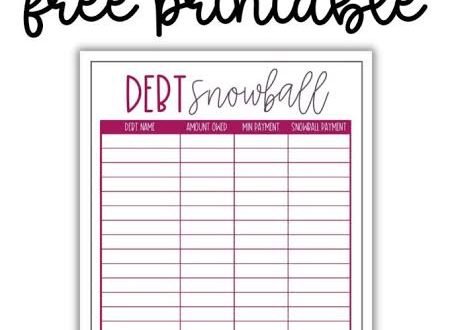
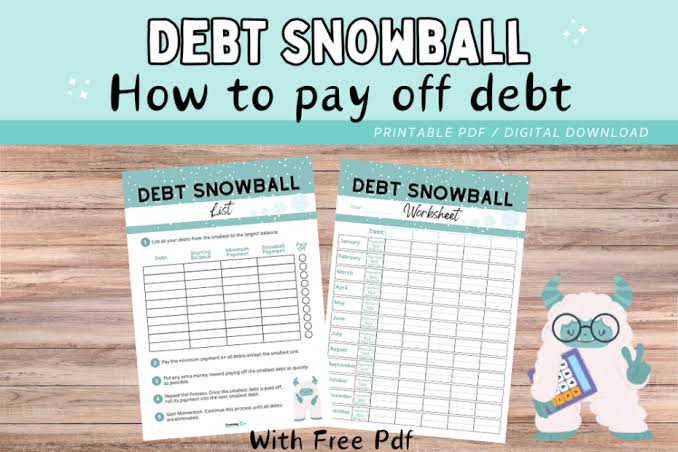
Set up a simple tracker — a notebook, a spreadsheet, any format you’ll actually use — with each debt, its balance, its minimum, and a column for the date you paid it off. That last column matters more than people expect. When Debt A is cleared, write the date down. That’s real progress, and recording it makes the next step easier.
No financial professional is required to run this method, and you don’t need to pay for a program or course. The approach is public, well-documented, and free. A budget that creates margin, consistent minimum payments across all accounts, and the discipline to apply extra payments in order — that’s the whole thing.