Last updated: August 10, 2026
- The avalanche method sorts debts by APR, highest first — not by balance size, minimum payment, or account type.
- APR includes certain fees that a raw interest rate does not, making it a more accurate cost comparison across different debt types.
- A 0% promotional balance has an effective APR of zero until the promotion expires — track expiry dates and reorder your list when they approach.
- Variable-rate debts (most credit cards) can change APR when benchmark rates shift; review your ranking at least quarterly.
- Any installment loan carrying a prepayment penalty has a true payoff cost higher than its stated APR alone suggests.
- A debt payoff plan you actually follow beats a mathematically optimal one you abandon — avalanche causing missed payments means it’s time to switch methods.
- Tax-deductible interest (common on mortgages and some student loans) can reduce the after-tax cost of a debt below its stated APR; consult a tax adviser before finalizing your ranking. IRS Topic 505 covers student loan interest deductibility.
Most debt payoff guides bury the actual math. Prioritizing debts by APR using the avalanche method comes down to one core step: list every debt you carry, sort that list from the highest annual percentage rate to the lowest, and direct every spare dollar toward the top item while paying minimums on everything else. Everything below explains why the sorting step matters, where people get it wrong, and what to do when a clean APR ranking is harder to find than it sounds.
This article explains how a debt payoff strategy works. It is not financial advice. Your own debt situation involves variables — income, tax treatment, lender terms, jurisdiction — that a qualified financial adviser can assess in ways a general article cannot. Consult a licensed financial professional before making significant changes to your debt repayment plan. For general guidance on debt management, the Consumer Financial Protection Bureau is a reliable starting point.
Why APR Is the Right Sorting Criterion for the Avalanche Method (and What It Actually Measures)
Interest cost is the reason debt payoff strategy exists at all, and APR is the single number that captures it most completely. The avalanche method rests on one observation: a dollar of extra payment eliminates more future interest when it reduces a high-rate balance than when it reduces a low-rate one.
APR is not the same as the interest rate, though the two are often close on simple consumer debts. APR folds in certain fees — origination charges, annual fees on some products — and expresses the total annualized cost as a single percentage. For comparing debts against each other, APR is a more complete signal than a raw interest rate, which may not include those fees.
Here’s where it gets complicated: a credit card’s APR is typically a variable rate, often expressed as a base rate plus a margin. Personal loans and car loans are usually fixed. Student loans may be either, depending on when they were taken out and in which country. These aren’t the same kind of number even when they look similar on paper — a variable-rate card at a given APR today could be noticeably higher next year; a fixed-rate loan won’t budge. That doesn’t change how you sort the list — highest effective APR at the top, full stop — but it does mean re-checking your ranking whenever rates shift.
The Honest Side-by-Side: Avalanche vs. Snowball
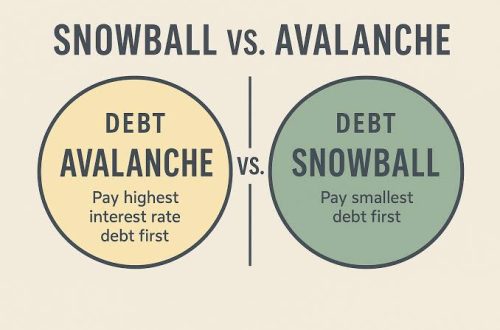
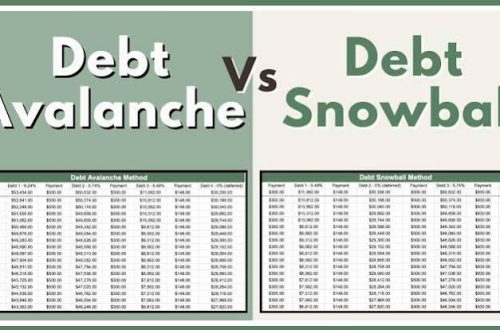
Before going further into APR mechanics, naming the alternative directly is worth the detour — the choice affects how you apply the APR ranking throughout the whole process.
| Criteria | Avalanche (APR-sorted) | Snowball (balance-sorted) | Wins for |
|---|---|---|---|
| Total interest paid | Lower, all else equal | Higher in most scenarios | Avalanche |
| Time to first debt eliminated | Longer if highest APR debt has large balance | Shorter — smallest balance goes first | Snowball |
| Mathematical optimality | Yes, by construction | No | Avalanche |
| Psychological momentum | Requires discipline through a long first payoff | Early wins reinforce behavior | Snowball |
| Works best for | People motivated by seeing numbers, not events | People who need behavioral reinforcement | Depends |
| Risk of abandonment | Higher if first debt takes years | Lower | Snowball |
| Complexity to set up | Slightly higher — need accurate APRs | Low — balance is obvious | Avalanche |
The avalanche wins on math. The snowball wins on psychology for some people. Neither wins unconditionally, and I’ll come back to the question of reconsidering the avalanche entirely later.
How to Build Your APR-Ranked List: The Actual Steps
Generic guides fail here: they say “sort by APR” and move on. Building a list you can actually trust requires a few specific steps that most articles skip entirely.
Step one: Find every APR, not just the ones on your most recent statements.
Pull the most recent statement for every account you carry. On credit cards, look for the line that says “Purchase APR” or “Variable APR” — not the promotional rate, not the balance transfer rate, not the penalty rate. Each of those is a different number, and balances under a promotional 0% rate need their own entry in your list because the rate will change. (Card issuers are required to disclose APR terms under the Truth in Lending Act; your statement’s Schumer Box is the reliable place to find the current figure.)
Promotional rates are a specific case worth pausing on. A balance under a 0% promotional period carries an effective APR of zero for the duration of that promotion — a fact worth tracking carefully, because the clock matters as much as the rate. On the day the promotion expires, that same balance likely jumps to a standard rate that may be among the highest on your list. Track the expiry date and reorder your list at that point. Some people choose to aggressively pay that balance just before expiry rather than waiting for it to enter the ranking naturally. Either approach is defensible; the point is that you need a calendar entry, not just a snapshot.
Step two: Account for deductible interest.
In some jurisdictions, interest on student loans or mortgage debt may be tax-deductible, which effectively reduces the after-tax cost of carrying that debt. A mortgage at a stated rate of, say, 7% may cost less than 7% in effective terms if a portion of that interest reduces taxable income — though the exact reduction depends on your marginal tax rate, filing status, and jurisdiction, and cannot be stated as a universal figure. Significant deductible debt warrants a conversation with a tax adviser before you finalize your ranking; the IRS provides guidance on deductible interest at IRS Topic 505. Ignoring deductibility can lead you to aggressively pay down a loan that, after taxes, costs less than a non-deductible debt with a nominally lower rate.
Step three: Write the list and mark the type.
A usable list looks like this: debt name, current balance, APR, whether the rate is fixed or variable, and any expiry dates. Sort descending by APR. That last column — type and expiry — is what separates a list you can maintain from one that misleads you six months from now.
Where APR Sorting Gets Genuinely Complicated
The clean version of the avalanche assumes all balances compound on the same schedule and that you have no constraints on which debts you can overpay. Reality introduces friction at several points.
Daily vs. monthly compounding. Most credit card interest in many countries compounds daily. Most installment loans compound monthly. Two debts with similar APRs — one daily-compounding, one monthly — aren’t actually equivalent; the daily one costs slightly more even at the same stated rate. Honestly, for most ranking decisions this difference is small enough to ignore, but it’s worth knowing it exists.
Prepayment penalties. Some auto loans and personal loans include prepayment penalties — charges for paying down a balance faster than the contractual schedule. A loan carrying such a penalty has a true accelerated-payoff cost higher than the APR alone suggests. Check your loan agreement before directing extra payments at any installment loan. This is not common on consumer credit cards, but it does appear on some personal loans and mortgages.
Minimum payments and cash flow. The avalanche works only when you can sustain minimum payments on every other debt while overpaying the top one. Tight cash flow creates a real risk the method’s math doesn’t capture: one unexpected expense, and you’re missing a minimum payment — triggering a late fee, potentially a penalty APR on that account, and a credit score impact. Those costs may outweigh the interest savings from the avalanche’s optimality. A small cash buffer before starting aggressive overpayment isn’t a deviation from the strategy; it’s a precondition.
The Real Difference Between a Correct and an Incorrect APR Ranking
The most common mistake in personal finance discussions about the avalanche method is conflating balance size with priority. A large balance at a moderate rate often feels more urgent than a small balance at a high rate, simply because the large-balance number is more visible and anxiety-producing. The avalanche requires ignoring that instinct — and that instinct is surprisingly stubborn.
The feeling of urgency is real, but it reflects psychology, not math. Here is a concrete illustration using made-up numbers to show the structure — not real outcomes you should rely on. Suppose you have three debts:
- Debt A: large balance, 14% APR
- Debt B: medium balance, 22% APR
- Debt C: small balance, 9% APR
The avalanche ranking is B → A → C. Confronted with this list, many people feel the pull toward A first because the balance feels weighty, or toward C because eliminating it feels achievable. Neither instinct reflects the rate at which interest accumulates. Every month that Debt B sits at a higher rate is more expensive than that same month would be if you had already eliminated it and were now attacking A.
That structure makes the principle visible: the payoff order is correct even if Debt B takes longer to eliminate than Debt C would have. The avalanche’s math is built on the idea that minimizing total interest paid over the full timeline is worth accepting a longer wait for the first payoff event.
Avalanche Wins Here — Specifically for This User Profile
The avalanche method is the right choice for someone who:
- Can accurately identify the APR on every debt they carry
- Has stable enough monthly cash flow to sustain minimums on all debts while overpaying one
- Is motivated by numerical progress — watching the interest rate at the top of the list fall — rather than by the psychological event of eliminating an account
- Has a high-rate debt (a credit card in the range many issuers charge, or a payday-style product if applicable) that meaningfully outpaces the rates on other debts
By contrast, the method is a harder fit for someone whose highest-APR debt is also the largest balance by a significant margin — particularly when the gap between rates is small. With all debts within a few percentage points of each other, the mathematical advantage of the avalanche shrinks, and the snowball’s motivational benefit may produce better real-world outcomes simply by keeping the person on a payoff plan at all.
Exception Scenarios: When the Avalanche Verdict Flips
1. A promotional rate about to expire. A balance currently at 0% that will convert to a high rate in sixty days is generally worth treating as a near-term priority — though the right move depends on your full balance picture, income, and cash reserves; a financial adviser can help you weigh the trade-off. Paying it down before the conversion is a reasonable deviation from the strict current-APR ranking, and the CFPB’s debt management resources offer additional guidance on managing promotional rate transitions.
2. When the highest-rate debt has a prepayment penalty that exceeds near-term interest savings. Run the numbers for that specific debt. A substantial penalty relative to the balance and timeline can make early payoff on that debt more expensive than the APR implies.
3. Strong evidence that your income will drop. Aggressively paying down a low-minimum debt while income is still high means lower required cash outflows later. In some circumstances, preserving liquidity by holding debt at a moderate rate beats reducing a high-rate balance that also carries a large required minimum. Because income changes interact with your tax situation and emergency fund needs, this scenario benefits from professional review.
4. When the psychological cost of the avalanche is causing skipped payments or plan abandonment. A debt payoff plan that gets abandoned produces worse outcomes than a mathematically suboptimal plan that you actually follow. Behavioral consistency over years matters more than the theoretical optimum on paper — full stop.
Maintaining the APR Ranking Over Time
Building the list once is not enough. APRs on variable-rate accounts change when benchmark rates change. Your lender may adjust your rate after a missed payment, a credit check, or a periodic review. Promotional rates expire. New debt may enter the picture. Any of these can silently change your optimal payoff order, which is why a regular review schedule is part of the method itself — not optional maintenance.
A quarterly review takes ten minutes and keeps the ranking honest: pull current APRs from each account’s online portal or statement, update the list, confirm the top priority has not changed. Redirect your extra payment if it has. The method only works when the list it operates on reflects current reality.
Catching rate changes early matters because of that regular maintenance requirement. An account’s APR that has crept up since you last checked — which happens on variable-rate products when underlying benchmark rates rise — means the urgency of paying that balance has risen alongside it. Conversely, a rate reduction on your highest-APR debt might shift the ranking entirely and change which balance deserves your extra payment.
Choose Avalanche If. Choose Snowball If. Neither If.
Go with the avalanche if you can identify an accurate APR for each debt, you have at least one debt with a meaningfully higher rate than the others, and you are motivated by reducing total interest paid rather than by the event of closing an account.
Choose the snowball if you have tried debt payoff plans before and abandoned them, all your APRs are within a few percentage points of each other, or psychological reinforcement from an early win is what keeps you consistent.
Neither method makes sense when your cash flow cannot reliably cover all minimums each month — in that situation, stabilizing cash flow and building a small buffer is the prerequisite, not the payoff method.