Last updated: August 10, 2026
About 1 in 3 American adults carries revolving credit card debt from month to month — and most of them have already tried a payoff plan that didn’t stick. The right strategy depends on two things: how you actually behave with money, and whether your numbers make consolidation viable. Nail both, and the answer becomes obvious. Get them wrong, and you’ll follow a method that’s mathematically elegant but psychologically unsustainable — or you’ll consolidate into a lower rate while quietly running the cards back up on the accounts you just cleared.
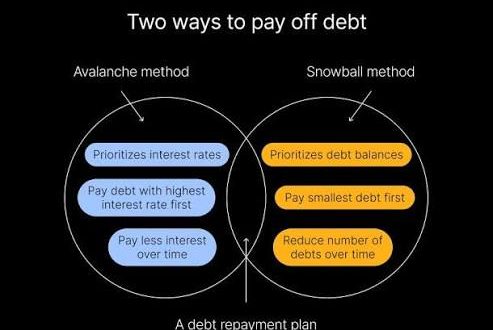
- The debt avalanche cuts the total interest you pay; the debt snowball maximizes early psychological wins by eliminating accounts faster.
- Balance transfer cards commonly offer 0% promotional periods of 12–21 months; the revert rate after that window can exceed 25% APR (Consumer Financial Protection Bureau, CFPB).
- Personal loan origination fees typically range from 1% to 8% of the loan amount and must be included in any consolidation cost comparison.
- Nonprofit debt management plans through NFCC member agencies typically charge monthly fees under $50 and negotiate creditor rate reductions directly.
- The Consumer Financial Protection Bureau (CFPB) and the National Foundation for Credit Counseling (NFCC) both offer free guidance on comparing debt repayment strategies.
- Roughly 1 in 3 U.S. adults carries revolving credit card debt month to month, according to the Federal Reserve’s G.19 Consumer Credit report.
This article is information, not financial advice. Debt situations vary enormously by income, credit profile, country, and tax rules. Consult a qualified financial adviser before making decisions about your own debt.
What Actually Determines the Right Answer When Choosing a Debt Payoff Strategy
Most articles open with definitions. Starting with what actually matters is more useful.
These three methods address different problems. The avalanche (highest interest rate first) cuts total interest paid over time. The snowball (smallest balance first) generates early wins that sustain motivation. Consolidation — rolling multiple debts into one, usually at a lower rate — reduces both cost and complexity, but requires credit eligibility and imposes real discipline on new spending.
None of these is universally better. The avalanche looks best on a spreadsheet. But a spreadsheet doesn’t get tired, doesn’t face an unexpected car repair in March, and doesn’t feel demoralized after six months of grinding down a large balance that barely moved. That psychological gap is where most plans collapse — and it’s the core reason your method choice matters beyond pure math.
Two questions cut through most of this:
1. Can you stay on a plan without regular visible progress? Honestly no? The snowball is probably your method, even though it costs more in interest.
2. Do you qualify for a meaningfully lower consolidation rate — and can you commit to not touching the cleared credit lines? One “no” in that sentence makes consolidation a repackaging exercise rather than a solution.
Worth a moment: Write down your three largest debts. Then write down which one you most want to eliminate. That’s the smallest balance, not the highest rate? Read the snowball section carefully.
Your Biggest Problem Is Staying Motivated: The Snowball Case
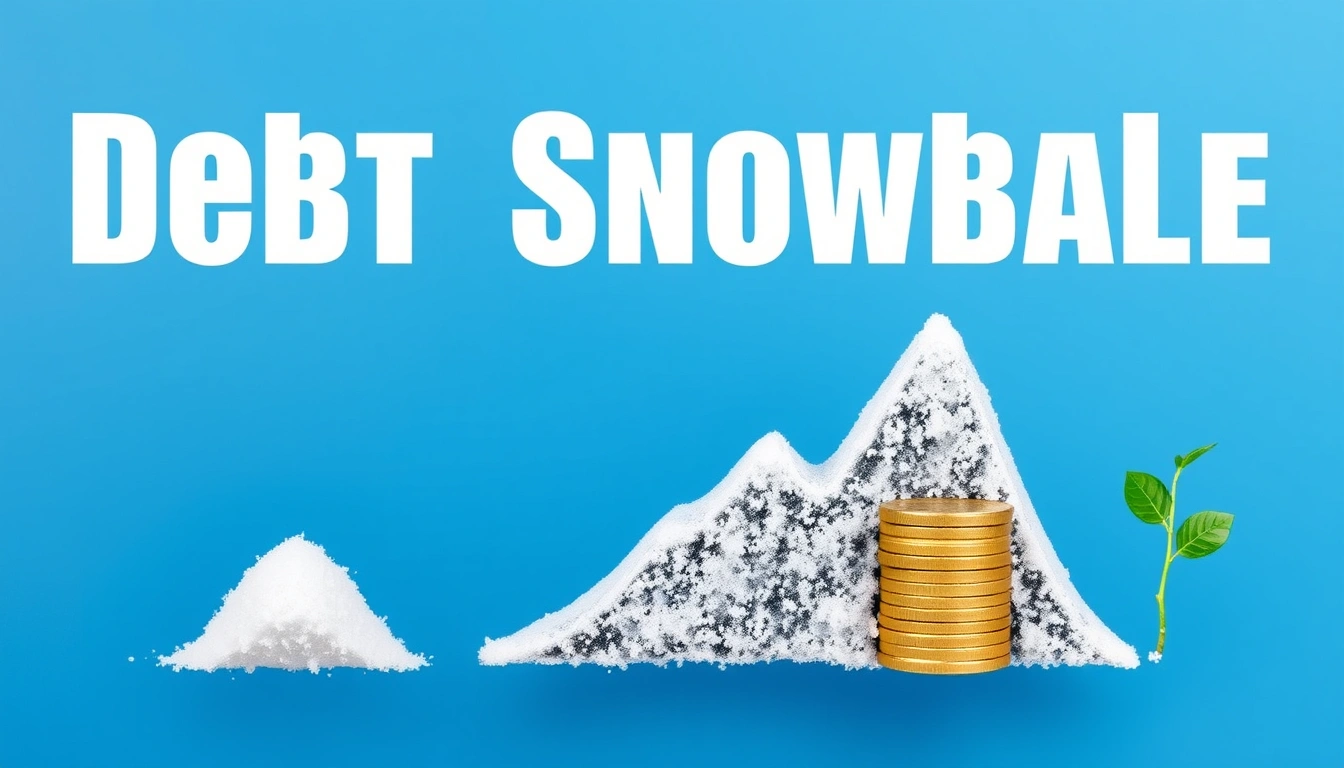
The debt snowball, associated most prominently with personal finance educator Dave Ramsey, works by listing debts smallest to largest by balance — then attacking the smallest first while paying minimums on everything else. Once that debt is gone, its payment rolls into the next.
What makes it work isn’t math. It’s psychology. Paying off a balance entirely feels different from shaving 8% off a large one; the former delivers a clean break, the latter is nearly invisible progress. Among people who have tried and abandoned plans before, that distinction often determines whether any plan survives past month six. Here’s when choosing the snowball makes sense:
- List all debts smallest to largest by outstanding balance, ignoring interest rate entirely.
- Calculate the minimum payment on each.
- Direct every dollar beyond the minimums to the smallest balance.
- When that balance hits zero, add its former payment to the next smallest balance’s payment.
- Repeat until all debts are cleared. Do not open new credit lines during this period.
- Should a new debt enter the picture (medical bill, emergency), list it in order and continue the sequence.
The honest cost of this method: you will pay more total interest than with the avalanche when your smallest balances carry lower rates than your largest ones. For some debt profiles, that gap is minor; for others, it’s significant. Model it yourself using a free debt payoff calculator — Undebt.it and PowerPay.org both let you compare methods side by side at no cost.
Who this is NOT for: Someone with one or two large, high-rate debts of similar size. There, the snowball produces no early wins because all your balances are roughly the same.
Ask yourself honestly: Have you quit a debt payoff plan before? Lose momentum as the reason? The snowball is worth the extra interest cost.
You Can Execute a Plan Mechanically: The Debt Avalanche Case
The avalanche lists debts by interest rate — highest first — and sends all extra payment there regardless of balance size. This is the method that keeps total interest paid to a minimum over the life of the debt. Full stop.
The catch: your highest-rate balance is often also your largest. Months can pass with no account actually closing. Some people handle that fine. Others hit exactly the kind of fatigue that kills plans — which is why honestly sizing up your own execution habits before committing matters more than the interest math alone.
- List all debts by annual interest rate, highest to lowest.
- Confirm the minimum payment on each.
- Calculate how much above the combined minimums you can reliably send to debt each month — be conservative here.
- Apply that entire surplus to whichever debt charges the highest rate.
- Once that debt is eliminated, redirect its former payment plus your surplus to the next highest rate.
- Revisit your numbers every three months; a balance transfer or rate reduction on one debt may change the ordering.
The avalanche genuinely outperforms when the highest-rate debt is also one of the smaller balances (giving you an early win anyway), or when the rate gap between debts is wide — say, a card at 24% APR versus a personal loan sitting at 10%. In that scenario, prioritizing the card can save hundreds or even thousands of dollars over a multi-year payoff. That math stops working fast if your rates are all clustered close together.
Before you commit: Pull out last month’s credit card statements. Can you immediately identify which card charges the highest rate? Had to think for a few seconds? Administrative friction may slow your execution more than expected.
Your Rates Are High and Your Credit Is Good: The Consolidation Case

Consolidation — whether through a personal loan, a balance transfer card, or a debt management plan through a nonprofit credit counsellor — earns its place when it genuinely reduces your average interest rate and you can commit to not re-accumulating debt on the cleared accounts.
The rate reduction is where the value actually lives. High existing rates plus a significantly lower consolidation offer means every dollar you pay now chips away at principal rather than servicing interest charges. Without that reduction, consolidation is administrative convenience at best — and a trap at worst.
- Add up all current balances and calculate a weighted average interest rate across them.
- Check your credit score (free through many bank apps or services like Credit Karma in markets where it’s available). A strong score opens better options.
- Get real rate quotes — not advertised ranges — from at least two lenders or balance transfer offers. Rates and eligibility vary by country, lender, and credit profile.
- Factor in all fees: origination fees on personal loans (typically 1–8% of the loan amount), balance transfer fees (commonly 3–5% of the transferred amount), and any annual fees. Add these to your total cost comparison.
- Calculate your monthly payment under the consolidation option and confirm it fits your budget without straining.
- Should you proceed, physically cut or freeze — don’t close, which affects credit utilization — the cleared credit cards. Removing temptation matters more than the closing itself.
- Set up automatic payments on the new loan to avoid missed payment penalties.
Balance transfer cards with a 0% promotional window of 12–21 months can be powerful — but that period ends, and the revert rate afterward can exceed 25% APR (CFPB, consumerfinance.gov). Can’t clear the balance before expiry? Model the full cost including what you’d owe once the higher rate kicks in.
Debt management plans through nonprofit credit counselling agencies (such as NFCC member agencies in the US, or equivalent bodies in other markets) are a different route worth knowing: these agencies negotiate reduced rates with creditors directly and consolidate your payments without requiring a loan. Monthly fees stay modest — typically under $50 — and the structure is formal. People who don’t qualify for favourable loan rates often find this beats a high-rate consolidation loan by a real margin.
The consolidation trap most people miss: clearing card balances with a loan and then gradually running those cards back up. Consumer finance researchers and the NFCC consistently flag this pattern as one of the primary reasons consolidation fails to reduce overall debt burden. Because it’s a genuine behavioral risk — not a rare edge case — treat consolidation as ill-advised unless you have a clear, concrete answer to why the spending that created the original debt won’t resume. Consider working through that question with a nonprofit credit counselling agency before moving forward.
One last check: Does your total available credit increase after consolidation? Honest yes? Do you have a concrete plan for those cleared lines?
| Situation | Best Path | Why Other Options Tend to Fail |
|---|---|---|
| Several small balances, history of abandoning plans | Snowball | Avalanche produces no early wins; consolidation requires behavioral discipline that prior history doesn’t support (NFCC guidance) |
| One or two large balances at very high rates, strong execution habits | Avalanche | Snowball costs meaningfully more in interest; no rate reduction available without consolidation eligibility |
| Good credit, multiple high-rate debts, no new spending problem | Consolidation then avalanche/snowball on remaining debts | Without behavioral change, consolidation restarts the cycle |
| Poor credit, high rates, overwhelmed | Nonprofit debt management plan + snowball | Loan consolidation unavailable or rate isn’t lower; avalanche feels abstract when situation is stressful |
| One debt dominates (>70% of total balance) | Avalanche if it’s highest rate; snowball offers no structural advantage | Clearing small side-debts first delays the core problem |
When the Standard Advice Breaks Down
You have a debt with a variable rate that’s rising. The avalanche assumes stable rates. One of your debts is at a variable rate that’s been climbing? That account may need to jump the queue — even if it’s not currently the top rate — because it will be shortly. Recalculate order using projected rates, not where things stand today.
You’re likely to lose access to credit soon. Deteriorating credit (missed payments, rising utilization) can make a balance transfer or consolidation loan unavailable in six months. Pursuing consolidation now — while you still qualify — can make sense even when the savings are modest, because that option closes. This flips the usual “only consolidate for meaningful rate savings” rule.
Your income is irregular. The snowball is usually pitched as a motivation tool, but it has a structural advantage for variable-income earners: smaller balances clear faster and permanently reduce the number of minimum payments you must cover in a lean month. Fewer required payments means more resilience. Honestly, this underappreciated reason to choose the snowball has nothing to do with psychology.
A 0% promotional debt is in the mix. Strict avalanche logic says attack the highest non-zero rate first. Even so, a 0% balance transfer with an expiry date must be cleared before that date or the economics reverse entirely. Schedule this debt around its deadline, not its nominal rate — which is currently zero and would therefore land at the bottom of any avalanche ranking.
A family member is also on the account. Consolidation affects joint liability differently than individual payoff strategies. In some jurisdictions, a consolidation loan replaces a shared obligation with a sole one, or vice versa. The legal and credit implications are specific to your situation and jurisdiction — worth clarifying with a financial or legal adviser before proceeding.
You’re close to qualifying for income-tested benefits. Some benefit programs assess the assets and debts you hold, and restructuring them can affect eligibility. Rolling debts into a single loan may change how your financial position appears on means-tested applications. Any benefits relevant to your household? Check this before restructuring.
How to Actually Make the Decision Today
Grab a piece of paper or open a spreadsheet. For each debt, write: balance, interest rate, minimum payment, and whether the account can be closed or the credit line frozen without penalty.
Then answer these honestly:
- Have I ever stuck with a financial plan for more than a year? (Yes → avalanche or consolidation are viable. No → snowball is lower risk.)
- Does my credit score likely clear the threshold for a favourable personal loan or balance transfer? (Unsure → verify before assuming consolidation is on the table.)
- Will those cards get used again within 12 months of being cleared? (Honest yes → consolidation will probably make things worse.)
The method that actually works is the one you execute for two years — not the one that wins on a comparison chart. An imperfect plan maintained consistently beats a mathematically optimal plan abandoned at month four.
Whatever path you choose, run the numbers yourself with one of the free calculators mentioned above. And particularly when the total debt is significant relative to your income, speak with a nonprofit credit counsellor (find an NFCC-affiliated agency at nfcc.org) or a licensed financial adviser who specialises in debt management before committing to any restructuring.