Last updated: August 10, 2026
- Balance-transfer promotional periods typically run 6–21 months; transfer fees are usually 1–5% of the amount moved.
- Stretching a 3-year payoff to 7 years can more than double total interest paid even at a reduced rate.
- A hard credit inquiry from a new loan application causes a small, temporary score dip — typically 5–10 points — that recovers within 12 months.
- Credit utilisation (revolving balance ÷ limit) is a significant factor in most scoring models; paying off card balances through consolidation usually improves it immediately.
- Federal student loans in some countries carry income-driven repayment and forgiveness options worth up to tens of thousands of pounds or dollars — options that disappear if those loans are rolled into a private consolidation product.
- Nonprofit debt management plans (DMPs) negotiate reduced rates with creditors; the average DMP completion period is 3–5 years.
- Consolidation does not erase debt — the average UK household carrying unsecured debt owed approximately £9,600 in 2023 (Money and Pensions Service data).
Most people consolidating debt are holding four or five separate balances — cards, store credit, a personal loan — each bleeding interest at a different rate. Debt consolidation doesn’t make what you owe disappear. What it does is restructure it: one payment, one rate, and — done right — more of every pound going toward the actual principal instead of feeding the interest clock. Whether this works out well or badly depends almost entirely on the rate you get and what you do with the cleared accounts afterwards.
This article explains how debt consolidation works and what it does to your repayment timeline. It is information, not financial advice. Your own situation — income, credit profile, debt mix, country of residence — determines what makes sense for you. Please consult a qualified financial adviser before making decisions.
What Debt Consolidation Actually Does to Your Debt
Four separate balances — two credit cards, a store card, and a personal loan — means four interest calculations running simultaneously and four payment dates to track. Miss one and you’re looking at a late fee and a possible penalty rate. The administrative drag is real, and it’s easy to underestimate.
Consolidation moves all four into one. The mechanics differ by product: a balance-transfer credit card, a personal consolidation loan, a home equity loan, and a debt management plan each work differently. Structurally, though, the result is the same — one creditor, one payment, one rate.
Here’s the question that actually matters: how does that single rate compare to the blended average of the rates you’re replacing? Cards charging in the high teens or twenties (expressed as APR, though exact figures vary by country and lender) versus a consolidation loan sitting at least 3–5 percentage points lower — that gap produces a genuine saving. But extend the term from three years to seven, even at a cheaper rate, and you may end up paying considerably more in total despite a lower monthly bill. There’s the trade-off consolidation marketing tends to gloss over.
Think of it this way: a longer term cuts the monthly payment but raises total interest paid. Those two numbers move in opposite directions. Both matter.
The Four Main Debt Consolidation Routes and What Separates Them

Balance-transfer credit card. A new card offers a promotional rate — often zero or near-zero — on transferred balances for a fixed introductory window, commonly between 6 and 21 months, though offers vary by market. The appeal is obvious. So is the trap: fail to clear the balance before the promotional period closes, and whatever remains reverts to the card’s standard rate — which may be higher than what you originally had. Transfer fees typically run 1–5% of the amount moved and need to be baked into your numbers from day one, not treated as a rounding error.
Personal consolidation loan. A fixed-rate, fixed-term loan that pays off existing balances directly or releases funds to you. A fixed term creates a hard payoff date — something a revolving credit card never gives you. Approval and rate hinge heavily on credit score and, in some jurisdictions, income verification. A weak credit profile can produce a rate high enough to wipe out most of the mathematical benefit.
Home equity loan or line of credit. Secured against property, so rates are typically lower than unsecured options — often 2–6 percentage points lower in current UK and US markets. That advantage comes with a fundamental change in risk: you’re converting unsecured debt into secured debt, and your home backs the loan. Repayment failure puts the asset at risk, full stop. For an independent overview, see the Money Advice Service guidance on secured loans. Get professional advice before going this route — honestly, it’s the one product on this list where skipping that step causes the most harm.
Debt management plan. Offered through nonprofit credit counselling agencies in some countries, this is not technically a loan. The agency negotiates reduced rates with creditors; you make a single monthly payment to the agency, which distributes it. Credit accounts are typically closed as part of the arrangement — which affects utilisation and average account age, both factors in your credit score. There’s a profile cost here worth weighing before you sign up.
How Debt Consolidation Changes Your Payoff Timeline
The timeline shifts in ways that can catch people off guard.
Consolidate at a reduced rate while keeping the same monthly payment amount, and your payoff date moves closer — more of each payment hits principal rather than interest. Achievable, yes. But it requires treating the monthly payment floor as a floor, not a ceiling, and staying consistent. Not a guaranteed result; the rate difference and your behaviour both feed into the outcome.
Accept a longer term to shrink monthly payments, on the other hand, and the calendar moves the wrong way. Monthly outlay might drop 30–50% — that cash-flow relief is real and for some people genuinely necessary — but years get added to the payoff date and total interest climbs. A legitimate choice, but one that should be made with the full-cost figure on the table, not just the monthly number.
Third scenario — and this one doesn’t get nearly enough attention. Consolidate, feel relieved, then keep using the cards you just cleared. The balances you moved sit at zero. New spending accumulates on those accounts while the consolidation loan runs alongside. Total debt ends up higher than when you started. This is the most common way consolidation fails, and it’s almost never mentioned in the brochure.
Any payoff plan built around consolidation needs a specific rule about those cleared accounts: closed, frozen, or open with a strict zero-balance commitment.
How to Use Debt Consolidation Step by Step

Before applying for any consolidation product, work through these steps in order.
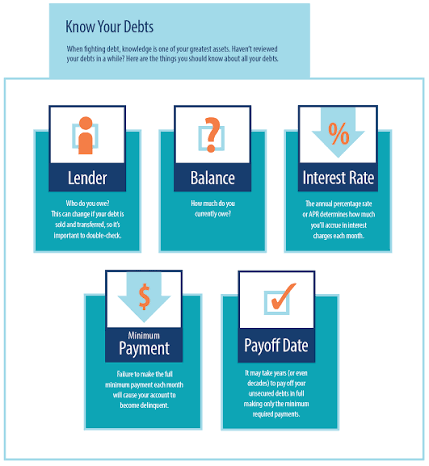
- List every debt with its balance, rate, and minimum payment. Calculate the weighted average interest rate across all of them: multiply each balance by its rate, sum those figures, then divide by your total debt. That number is the benchmark every consolidation offer must beat.
- Get your credit score. In the UK, Experian, Equifax, and TransUnion each provide free reports. Your score determines which products and rates you can actually access — not which ones you’d like to access.
- Compare consolidation offers against that benchmark. Use the lender’s total repayment figure — not just the monthly payment — as the comparison point. A rate 3–5 percentage points below your weighted average, on a term no longer than your current payoff horizon, is the minimum worth pursuing.
- Check for overpayment penalties. Some loans allow overpayments without penalty; others charge for early repayment. Overpaying by even 10–15% per month can cut a 5-year loan term by 12–18 months — but only if the contract permits it.
- Decide what to do with cleared accounts before you consolidate, not after. Write it down. Either close them and accept the short-term credit profile effect, or leave them open with a hard personal spending limit of £0 / $0.
- Using a balance-transfer card? Calendar the promotional end date the day it arrives. Set a reminder 90 days out. Set a second one 30 days out. Reaching month 20 of a 21-month promotional window without a clear plan — or a transfer strategy — often leads to worse terms than a prepared approach would have secured, and in some cases means reverting to a high standard rate on a barely-touched balance. Seek advice from a nonprofit debt counsellor early. See the StepChange Debt Charity for free guidance.
- Track total interest paid quarterly. Not the monthly payment. Total interest. That figure tells you whether the plan is working.
The Effect on Your Credit Profile
Consolidation touches your credit profile in several places — and the effects don’t all point the same direction.
Applying for a new loan or card triggers a hard inquiry: a small, temporary dip of roughly 5–10 points across most scoring models, recovering within about 12 months. Modest on its own, but worth timing carefully around a mortgage application or car finance.
Paying off revolving card debt lowers your credit utilisation ratio — the share of available revolving credit you’re currently using — and that shift often produces a positive score movement within one or two billing cycles. Utilisation carries real weight in nearly every scoring model, so clearing those balances can help quickly.
Closing the accounts afterwards, though, cuts your available credit and pushes utilisation back up from whatever you spend. Average account age shrinks over time too. Both effects work against you. Leaving cleared accounts open at zero balances sidesteps this — though maintaining that discipline is exactly the thing that’s hard.
A debt management plan typically involves closures the borrower doesn’t fully control; the credit profile effect is similar but more pronounced.
Net impact? Depends on your starting profile, the products used, and what you do next. No single answer fits everyone here.
What Debt Consolidation Cannot Fix
Most articles soften this section or skip it. Worth being direct.
Consolidation restructures the cost and logistics of debt. It does nothing about the behaviour that built the debt in the first place. Spending that consistently exceeds income doesn’t get fixed by a cheaper rate — the rate just slows the damage. Debt grows again, and now the consolidation card has been played once; lenders are notably less enthusiastic about approving a second round shortly after the first.
Some debt types are also poor candidates. Federal student loans in some countries carry income-driven repayment and forgiveness provisions worth tens of thousands of pounds or dollars — provisions that vanish the moment those loans get rolled into a private consolidation product. Rolling tax debt into a personal loan may eliminate structured payment arrangements that carried more favourable terms. Because secured debt conversion carries risks distinct from unsecured consolidation, independent advice before mixing debt types isn’t optional — it’s just sensible. Consult a qualified financial adviser or a nonprofit debt counsellor; each debt type deserves evaluation on its own terms.
Some people aren’t strong candidates for consolidation products at all. A credit score low enough that the quoted rate sits at or above your current weighted average leaves no mathematical case for proceeding. Paying down the highest-utilisation card first and correcting any credit report errors can meaningfully improve the options available within 6–12 months — cheaper, sometimes, than taking a bad consolidation deal now.
One more thing: consolidation advertising is optimistic by design. Ads lead with the lower monthly payment, not the total cost. Read the full loan offer — look at what you’ll repay in total, not what leaves your account each month.
Building a Payoff Plan That Uses Consolidation Correctly
Used as a tool within a plan, consolidation can work well. Used as the plan itself, it usually doesn’t.
Start by calculating the monthly payment that would clear the consolidated loan significantly ahead of the stated term. Overpaying by 10–20% from the outset — assuming the contract allows it without penalty, which you should verify before signing — can shorten a 5-year loan to 3.5–4 years and reduce total interest by hundreds to thousands of pounds or dollars depending on the balance.
Each early payment reduces the principal on which future interest compounds; the effect builds on itself. Even modest, consistent overpayments add up substantially across a multi-year loan. Small amounts, applied reliably, do more than people expect.
Set the rule for cleared credit accounts before consolidating — not after the relief sets in. Close them immediately and absorb the credit profile effect, or leave them open with a zero-balance personal rule and, where possible, automate a sweep to keep them there. The costly pattern is clearing the cards and then treating them as fresh available credit; debt re-accumulates alongside the consolidation loan, and you end up worse off than before the whole exercise.
Check total interest paid every quarter. That single figure is the honest measure of whether the consolidation is delivering what it promised.
To be fair, for people carrying multiple high-rate balances and stable income, debt consolidation genuinely does shorten the payoff window and reduce total cost. Not the wrong move — just a move with specific conditions under which it helps, and those conditions deserve honest scrutiny rather than wishful thinking.
Sources: Money and Pensions Service (MaPS), Financial Wellbeing Survey 2023; StepChange Debt Charity, Statistics Yearbook 2023; Consumer Financial Protection Bureau (CFPB), What is a debt consolidation loan? (consumerfinance.gov).