Last updated: August 10, 2026
- Picture three debts: $500 at 5% , $2,000 at 18% , and $6,000 at 22% .
- Snowball takes the $500 balance first because it is smallest.
- Avalanche takes the 22% balance first because it is most expensive.
- Under snowball, the first target is obvious: the $380 balance.
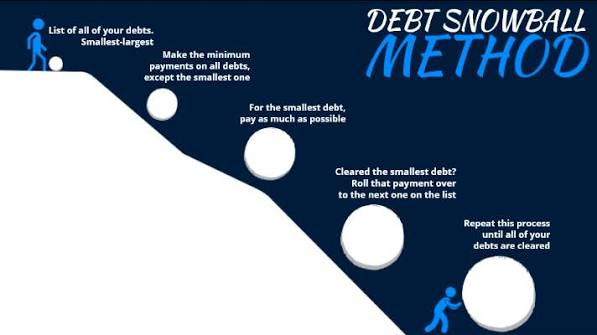
Quick Answer: The debt snowball method — complete guide in one sentence: pay minimums on all debts, attack the smallest balance first, and roll that payment into the next debt. Free up even $50 to $200 a month, and the snowball can show results fast; need the lowest total interest? Then an avalanche plan is usually the better math.
Key Facts
– The debt snowball method ranks debts by smallest balance to largest balance, not by interest rate.
– You keep making minimum payments on every debt while sending extra money to one target.
– When the smallest debt is paid off, you add that payment to the next debt.
– The method is usually chosen for motivation and follow-through, not mathematical optimization.
– Behind on essentials already, or missing payments? Consider budgeting help, creditor hardship options, or a qualified adviser before choosing any payoff order.
I’m writing this as a personal finance writer who has spent years explaining the debt snowball method — complete guide to readers in messy, real-life situations. Here’s the short version: start with the smallest balance, then pour that freed-up payment into the next debt. Not perfect. Effective? Often, yes. For unstable income, tax questions, or serious hardship, this is information, not financial advice; a qualified adviser is the right next stop.
Debt Snowball Method: What It Actually Is and How It Works
Stalled out? Debt snowball method helps right there. It turns payoff into a string of quick wins instead of one long slog. List every debt except your mortgage, sort them from smallest balance to largest balance, keep minimum payments going on all of them, and throw every extra dollar at the smallest balance until it disappears. Then move that payment to the next one. Simple. The growing payment is the “snowball.”
No mystery here. Psychology does the heavy lifting. A small account hitting zero gives you proof that the plan works, and proof matters once debt has already worn you down. Honestly, that emotional lift is the method’s real engine. People often do not need a perfect spreadsheet when they never stick with it long enough to see results.
So the debt snowball method — complete guide keeps circling back to the same point: visible progress changes behavior. A balance dropping from $1,200 to $0 feels very different from a line on a spreadsheet that “should” save money later. A payoff that takes 6 to 9 months is usually easier to keep going than a plan that saves a bit more interest but feels endless. For plenty of households, that trade-off is the whole ballgame.
Here’s the catch: if a bigger balance carries a much higher interest rate, snowballing can cost more over time than another payoff order. That is the price of choosing motivation over pure efficiency. Fair trade for some people. Expensive for others.
A generic article would stop there and act like the method is a moral victory. I wouldn’t. Snowball only works if the minimums stay current, new debt stops piling up, and cash flow stays steady enough to avoid panic mode. Missing payments? Collection calls? Variable income? Then the first question is not “Which debt order is best?” It is, “How do I steady the ship?”
The Real Difference Between the Debt Snowball and the Debt Avalanche
Snowball wins on motivation; avalanche wins on math. That is the split, and it is usually the deciding factor when you are choosing. In a snowball plan, debts go from smallest balance to largest balance. In an avalanche plan, debts go from highest interest rate to lowest interest rate, while minimum payments still go to everything else.
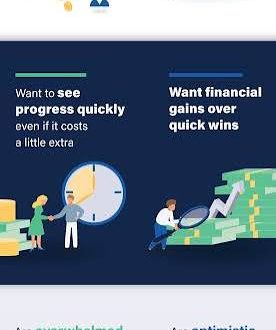
For disciplined, patient people who mainly care about saving interest, avalanche is usually the more efficient setup. For overwhelmed readers who have bailed on debt plans before, snowball often works better because it is easier to stick with. A plan on paper means nothing if you ditch it in month two.
Here is the blunt version of the trade-off. Snowball can leave you paying more interest, especially when the smaller balance has a low rate and the larger one has a high rate. Avalanche may cut total interest, but it can feel slow at the start — especially when the first target is a big, stubborn balance that barely seems to budge.
Picture three debts: $500 at 5%, $2,000 at 18%, and $6,000 at 22%. Snowball takes the $500 balance first because it is smallest. Avalanche takes the 22% balance first because it is most expensive. With an extra $300 a month, both routes still work; the real question is whether you want quicker emotional wins or lower interest expense.
Why do people argue about this method online and talk past each other? They are optimizing for different outcomes. One side wants maximum efficiency. The other wants the little victory that keeps them in the ring.
The Honest Side-by-Side
| Criteria | Debt Snowball | Debt Avalanche | Winner for [condition] |
|---|---|---|---|
| Starting momentum | Strong, because small balances disappear sooner | Usually slower to show visible progress | Snowball for people who need early wins |
| Total interest paid | Often higher if low-balance debts also have low rates | Usually lower because high-rate debt is attacked first | Avalanche for cost minimization |
| Ease of sticking with the plan | Often easier emotionally | Can feel less rewarding at the start | Snowball for discouraged beginners |
| Complexity | Simple to explain and follow | Still simple, but requires more attention to interest rates | Snowball for people who want a clearer script |
| Best use of extra cash | Extra payment goes to the smallest balance first | Extra payment goes to the highest-rate debt first | Avalanche for interest-heavy debt loads |
| Emotional payoff | High, because accounts close faster | Lower at first unless the highest-rate debt is also small | Snowball for motivation |
| Risk of quitting | Lower for many people because progress is visible | Higher for some people because early wins are less dramatic | Snowball for people with a history of stopping |
| Math efficiency | Not the strongest approach | Usually the strongest approach | Avalanche for long-run efficiency |
| Best fit when income is tight | Can still work if minimums are manageable | Can work too, but requires the same minimum-payment discipline | Depends on behavior more than income alone |
The point of the table is not to name a universal winner. It shows that the two methods solve different problems. Snowball is a behavior tool. Avalanche is a math tool. Pick the one that fits the problem in front of you.
Debt Snowball Method: Who Should Actually Use This
Debt snowball fits people who need a plan that feels doable, not abstract. I’d point it at someone with several debts, a sinking feeling when they look at the list, and a history of dropping repayment plans. Want to see something disappear before you believe the rest can follow? Then snowball is built for that.
Also, it works well when one or two balances are small enough to wipe out in a reasonable span with focused payments. That matters because closure creates a psychological reward loop. Once the first account is gone, the payment you freed up becomes proof that your cash flow can grow without a raise. That can be powerful.
And it is easy to explain to a partner, a roommate, or a family member helping with budgeting. Smallest balance first. No interest-rate spreadsheet. No endless debate over whether the savings are “worth it.” That simplicity helps when the whole household is already under stress.
Say you have a $380 store card, a $1,400 personal loan, and a $7,900 credit card. Under snowball, the first target is obvious: the $380 balance. Add $120 extra per month, and that one could vanish quickly; then the full payment shifts to the $1,400 loan. That is the method in practice: one finished account at a time. Clean and plain. No drama.
I would not recommend snowball to everyone, though. If your debt is concentrated in one very high-interest account and you are the sort of person who will stay consistent with a more technical order, this trade may be wrong for you. It can also be a poor match if you keep using credit cards while paying things down. Then the method is not the real issue; spending habits are.
One more limitation matters: if essential bills are already slipping, or if debt payments are crowding out rent, utilities, or food, the smarter move may be budgeting help, hardship options, or professional advice first. Paying off debt is useful. Keeping the lights on is more useful.
Debt Snowball Method: The Specific Situations Where It Wins
Debt snowball wins when motivation is the bottleneck. That is the cleanest use case, and it is more common than people admit. Plenty of readers do not need a smarter spreadsheet. They need a plan they will not ditch the first time it gets boring.
Also, it wins when balances are small enough that the first few can be cleared fairly quickly. Quick wins stack. The first closed account makes the second target feel closer, and the freed-up payment makes the next step larger than it looked on day one. That compounding in payment size is why the method feels more dramatic than it is on paper.
Snowball is especially useful if you are rebuilding confidence after financial mistakes. Debt can make people ashamed, and shame loves complexity. A simple plan lowers the odds that you will keep redesigning the system instead of following it. When you catch yourself constantly rewriting budgets, building new trackers, or hunting for a “better” method without acting, snowball gives you one rule and one target. That helps.
It also fits debts that carry emotional weight, not just financial pain. A small personal loan from a rough season, a medical bill, or a credit card tied to a hard period can drain your attention. Clearing that balance can ease the mental drag, even if another account had a higher rate.
The weak spot is obvious: snowball does not care about interest cost. If the smallest debt is also the lowest-rate debt, you may pay more than necessary over time. That is the honest downside. Not tiny. Snowball is not “better” in any universal sense; it is better when adherence matters more than optimization.
How to Set Up the Debt Snowball the Right Way
Set it up cleanly, or it loses its edge. The method is simple, but the details still matter.
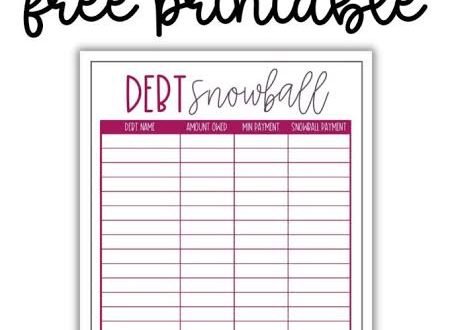
Start by listing each debt separately. Put down the balance, minimum payment, interest rate, and due date. Then sort the list from smallest balance to largest balance. Keep making minimum payments on everything so you avoid late fees, penalties, and credit damage. Put every extra dollar toward the smallest balance only.
Once that debt is gone, don’t spread the freed-up money around. Roll the full payment into the next smallest debt. That is the “snowball” part. The payment gets bigger because the old payment stays in the system.
For example, if you pay $75 a month on a small medical bill and add $50 extra, then finish that balance, the next debt gets $125 a month before any new surplus is added. If you later clear a second debt with a $90 minimum, your snowball may jump to $215 a month. Those numbers matter because the method gains power each time you keep the old payment intact.
This is where people often trip up: they celebrate the payoff and then quietly fold the freed-up money into regular spending. That breaks the method. The payment has to stay assigned to the next debt, or the snowball loses speed before it can build.
I’d also keep the payoff plan separate from your emergency-cash plan. If every dollar goes to debt and you have no cushion, one repair bill can shove you back onto a card. Even a modest buffer can keep a small surprise from blowing up your progress. I’m not naming a universal amount because that depends on country, income stability, and expenses, but the point is straightforward: some cash reserve helps prevent relapse.
Track the balances visually if that helps. A simple list, checkbox, or chart is enough. Fancy software is optional. Visible progress is the point.
The Honest Drawbacks of Debt Snowball
Debt snowball wins hearts before it wins spreadsheets, and that is also its biggest weakness. The method can feel so satisfying that people forget to check whether they are paying extra interest they could have avoided. When you like hard numbers, that can be a tough pill, but it matters.
The main drawback is opportunity cost. Focusing on the smallest balance instead of the highest interest rate lets expensive debt hang around longer. That can mean more interest over time. The exact gap depends on the debts involved, so I’m not pretending there is one universal answer. There isn’t.
The second drawback is behavioral: some people mistake “simple” for “complete.” They choose snowball, then stop there, hoping the method itself will fix overspending, a tight budget, or irregular income. It won’t. If new debt keeps replacing old debt, the snowball becomes a treadmill.
The third drawback is that the method can make larger, high-rate balances feel discouraging once the small wins are gone. Early progress is great. Later progress may feel slower. When your motivation depends on frequent closures, know this: the emotional boost usually weakens as the plan climbs the list.
There is also a hidden risk in any payoff method. Push too much money toward debt and leave yourself unable to absorb ordinary surprises, and you may end up borrowing again. That is why I treat debt payoff and basic stability as linked, not separate. When you are deciding how much to send toward debt, a certified financial planner, nonprofit credit counselor, or other qualified adviser can help you balance payoff speed with household stability. In the U.S., the Consumer Financial Protection Bureau also recommends comparing repayment options with your budget and cash reserves before you commit. A method that ignores your cash flow is not a full plan.
When to Reconsider This Choice Entirely
Debt snowball wins for many readers, but some situations call for a different answer.
For your highest-interest debt is crushing you and you are already disciplined enough to stick with a more efficient order, avalanche may fit better. In that case, the emotional benefit of snowball is smaller than the cost of keeping expensive debt around.
When you are behind on essential expenses, step back from any aggressive payoff plan. Missing rent, utilities, child support, or taxes can create consequences that are worse than carrying consumer debt longer. That situation may call for budgeting help, creditor contact, hardship options, or professional advice before any payoff method.
For an unstable income, a strict debt plan can fail unless it bends. A snowball that assumes a fixed monthly surplus may be too rigid for gig workers, seasonal workers, or anyone with irregular hours. In those cases, the first problem is cash flow management, not payoff order.
Should you keep adding new debt while paying old debt, no method will save you by itself. That is not a snowball problem. That is a spending and borrowing problem. The right move may be to pause, patch the leak, and then restart with a smaller, realistic plan.
The biggest exception is this: when your debt is tied to a larger financial crisis — divorce, job loss, medical hardship, or legal trouble — the smartest move may be tailored advice before you lock in any payoff sequence. A method can be useful and still be the wrong tool for the moment.
Our Verdict: Which One to Choose and Why
Choose the debt snowball if you need early wins, have already quit on other payoff plans, and want the simplest possible rule set. Choose the debt avalanche if you are steady, detail-oriented, and want the most efficient order for paying off balances. Neither is the answer if you are missing essential bills, still adding new debt, or facing a hardship situation that needs tailored advice first.
That is my clear call. Snowball is the better choice for more readers than the math purists like to admit, but only when behavior is the main obstacle. When you know you are more likely to stay engaged by seeing accounts disappear, pick snowball. When you know you will not be tempted to quit just because progress is slower, avalanche is hard to beat.
What I would not do is pretend the choice is mostly philosophical. It is practical. A plan that cuts stress by wiping out a $900 balance in three months can be more useful than a theoretically cheaper plan that feels endless. The best method is the one you will follow long enough to finish.
If you want the method in one line, I’d put it this way: use debt snowball to build momentum, not to optimize every dollar. That distinction keeps the method honest, and honesty is what makes it useful.
Debt Snowball Method: A Simple Example You Can Copy
Suppose you have three