Last updated: August 10, 2026
- At $150/month extra, expect to clear three smaller debts in roughly 16–18 months before attacking a larger loan.
- At $300/month, all four illustrative debts in this article clear in about 18–22 months.
- Bump that to $600/month and the timeline compresses to roughly 8–10 months for the same debt list.
- At $300/month extra, an illustrative four-debt list clears in roughly 18–22 months.
This article explains how the debt snowball method works using illustrative examples across different monthly budgets. It is not financial advice. Your own debt situation, interest rates, income, and obligations are specific to you — a qualified financial adviser can help you apply any strategy to your real numbers.
Quick Answer: The debt snowball method pays off debts smallest-balance-first to build momentum. At $150/month extra, expect to clear three smaller debts in roughly 16–18 months before attacking a larger loan. At $300/month, all four illustrative debts in this article clear in about 18–22 months. Bump that to $600/month and the timeline compresses to roughly 8–10 months for the same debt list. The method works across budgets — your payment amount determines speed, not whether the strategy applies.
Key Facts
-
Debt snowball orders debts by balance (smallest first), regardless of interest rate.
-
Each paid-off account frees its minimum payment and rolls it onto the next debt.
-
At $150/month extra, early wins arrive within months — the first small balance can clear in under 60 days.
-
At $300/month extra, an illustrative four-debt list clears in roughly 18–22 months.
-
At $600/month extra, the same list can be debt-free in under a year.
-
The debt snowball trades mathematical interest efficiency for behavioral consistency; the avalanche method (highest rate first) typically costs less in total interest for people who stay the course.
-
Windfalls, promotional-rate deadlines, and balloon payments can and should override the standard snowball sequence.
Three hundred twenty dollars. That’s the smallest balance on the illustrative debt list this article uses — and under the snowball method, it’s the first domino. Whether you have $150 a month to throw at debt or $600, that sequencing logic stays the same. What changes is how fast the dominoes fall. A household working with $150 of genuinely spare cash each month lives in a completely different timeline than someone with $600 to deploy. Both can use the snowball. Each person will feel it differently. This article walks through debt snowball examples at $150, $300, and $600 monthly payment levels — and the territory in between.
What the Debt Snowball Actually Does (and What It Doesn’t)
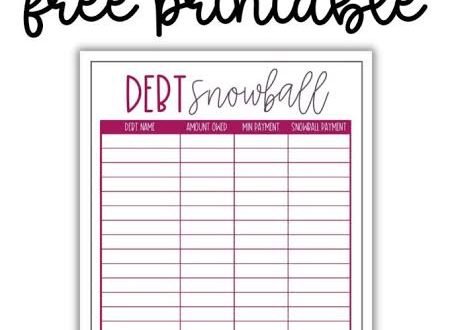
A payoff sequencing method — that’s all this is. List your debts from smallest balance to largest, regardless of interest rate. Pay minimums on everything except the smallest. Every extra dollar goes onto that smallest balance until it’s gone. Then roll the freed-up minimum — plus your extra — onto the next balance. That roll is the snowball. For a more detailed primer, see the CFPB’s debt management resources and the NerdWallet overview of the debt snowball.
Minimizing total interest paid? Not what this method does. That’s the avalanche (highest rate first). The snowball trades mathematical efficiency for behavioral consistency: closing an account faster creates momentum for people who need a visible win to stay engaged. Research published by the Harvard Business Review found that focusing on paying off individual accounts — regardless of balance size — increases the likelihood of eliminating debt overall.
Neither method is universally superior. The right pick depends on how quickly your low-balance debts disappear relative to your high-rate ones, and on your own psychology. Someone who abandoned three different repayment plans because progress felt invisible might do far better with the snowball even if it costs a bit more over time — and honestly, that’s not a small consideration.
Debt Snowball vs. Debt Avalanche: Which Should You Choose?

Two structured payoff methods dominate the conversation: the snowball and the avalanche. Avalanche targets the highest-interest debt first and typically results in less total interest paid — sometimes significantly less, depending on how far apart your rates are. Snowball targets the smallest balance first and typically produces faster early wins.
In practice, the right choice depends on your situation:
-
Choose snowball if you’ve struggled to maintain momentum on past payoff attempts, if your debts are varied in size, or if quick wins are motivating for you.
-
Choose avalanche if you’re disciplined, track your finances closely, and have one or two debts at substantially higher rates than the rest.
-
Consider a hybrid if one high-rate debt is close in balance to a smaller one — knock out the small one first for the win, then shift to rate-ordering.
Both methods beat making only minimum payments by a wide margin. The best method is the one you’ll actually stick with. For more context on choosing between the two, see our full avalanche vs. snowball comparison.
Why Use the Debt Snowball? The Core Benefits
Psychological advantage — that’s the snowball’s engine. And that’s not a criticism; behavioral consistency is the single biggest predictor of whether any payoff plan survives contact with real life. Specific benefits include:
-
Early wins: Closing an account within weeks creates tangible proof that the plan is working.
-
Simplicity: Sorting by balance is easy. No rate calculations required.
-
Momentum: Each closed account grows the payment rolling onto the next debt.
-
Reduced complexity: Fewer open accounts means fewer logins, fewer due dates, and fewer minimum payments to track.
The honest limitation: your smallest balance might carry a low interest rate while your largest carries a high one. Spend months retiring the cheaper obligation and the expensive one compounds the whole time. Over a multi-year payoff, that gap can add up to hundreds of dollars depending on balances and rates. Whether that cost is worth the behavioral benefit is a judgment only you can make.
The Honest Trade-Off Before You Start
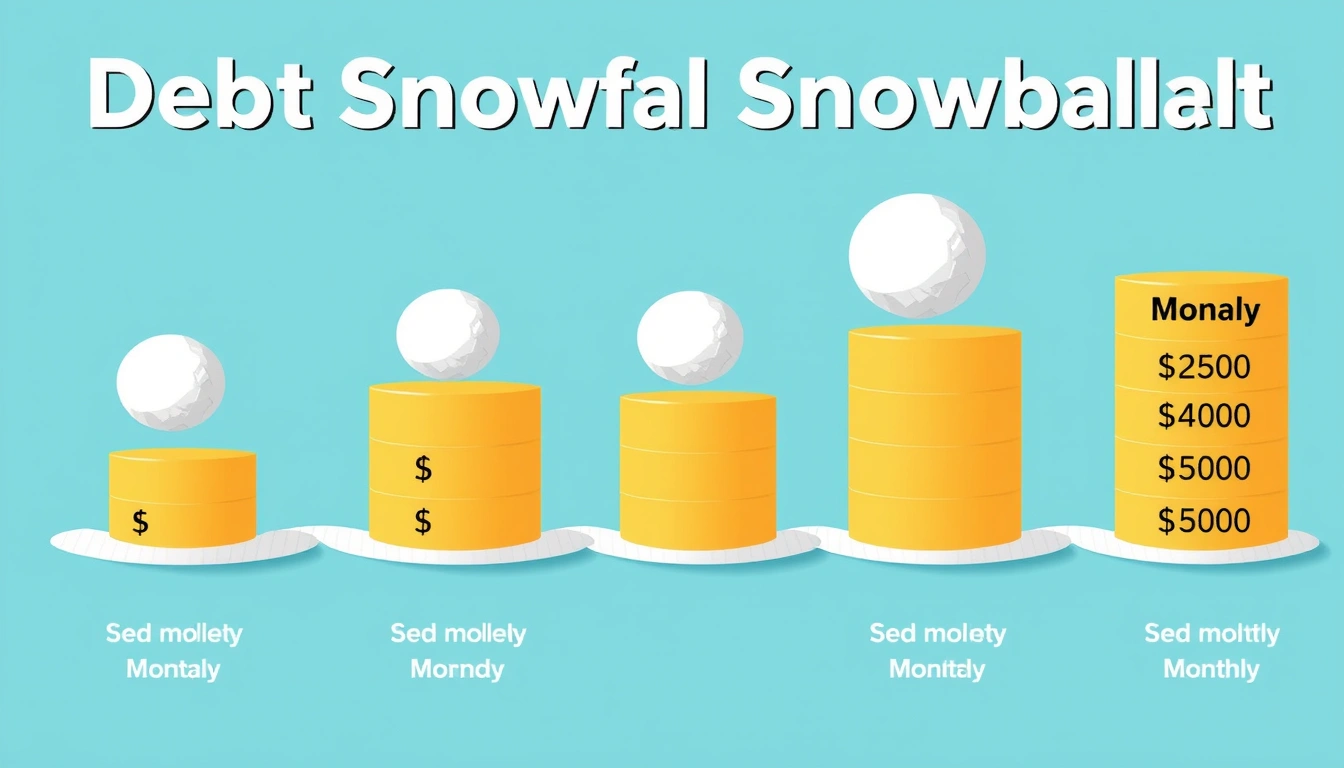
Here’s the math that doesn’t get mentioned enough: paying down cheap debt while expensive debt compounds is a cost, full stop. Over a multi-year payoff, that difference can reach several hundred dollars or more — exact figures vary too widely across individual situations to generalize honestly, but the direction is never good.
The snowball genuinely has completion rate going for it. Finish paying off your debts and any method was the right one. Quit halfway through and the method you chose on paper stops mattering entirely — consistency is what drives results, not sequence alone.
Debt Snowball Examples: Budget Level 1 — $150 Extra Per Month
Tight budget. Based on general household patterns, $150 of genuinely discretionary monthly income — above all fixed obligations — is realistic for many households managing multiple debt obligations simultaneously, though your own figure depends entirely on your income and expenses.
Illustrative debt list:
-
Store credit card: $320 balance, $15 minimum
-
Medical bill: $750 balance, $25 minimum
-
Personal loan: $2,400 balance, $60 minimum
-
Car loan: $6,800 balance, $200 minimum
Total minimum payments: $300/month. Extra available: $150/month.
Month 1: send $165 to the store card ($15 minimum + $150 extra). Gone in about two months. Now the snowball grows: $15 freed from the store card gets added to the medical bill’s $25 minimum — $190 total per month toward that $750 balance. The medical bill clears in roughly four months from your start date.
By the time you reach the personal loan, you’re throwing $250 a month at a $2,400 balance (plus whatever minimum payments have already chipped away at it). Paid off in roughly another 10 months.
Around 16–18 months in, three accounts are closed for this illustrative scenario. That sequence of cleared balances frees up roughly $450 per month to stack onto the car loan’s $200 minimum — close to $650 total pointed at a balance that has been slowly shrinking the whole time.
The early wins arrive in months, not years. That matters psychologically. A closed store card account by month two is a real event, not a theoretical one — and that kind of concrete progress is exactly what keeps people from abandoning the plan.
Worth knowing before you commit, though: the car loan and personal loan are doing nothing but accumulating interest during those first 16 months except for minimum payments. High rates on either one mean real money lost. For further reading on managing obligations at tight budgets, see our guide to budgeting while paying off debt.
Debt Snowball Examples: Budget Level 2 — $300 Extra Per Month
Same debt list. Completely different pace.
The store card is gone in about five weeks. The medical bill follows in roughly three months. Both early balances are cleared before the end of month four — two accounts closed, two fewer creditors, two fewer logins, two fewer minimum payments cluttering your calendar.
Reaching the personal loan, the snowball has grown to around $390 per month against that balance. Cleared in seven to eight months from your start date. Then comes the car loan with over $600 per month plus its $200 minimum — roughly $800 total — and the remaining balance has been eroding through minimums the whole time. From there it’s months, not years.
Total timeline from start to debt-free across all four accounts: roughly 18–22 months for this illustrative scenario. (Real timelines vary with exact rates, exact balances, and whether any balances change during the period.)
At $300/month, the snowball moves fast enough to feel real. Even so, the risk is that this plan assumes stability: no emergency, no income interruption, no new obligation. A month where $300 simply isn’t available breaks the rhythm. A small buffer — a genuine emergency fund, even a modest one — arguably matters more than maximizing the monthly payment, but that trade-off depends on your specific situation. See our emergency fund vs. debt payoff explainer for a fuller treatment.
Debt Snowball Examples: Budget Level 3 — $600 Extra Per Month
At $600 extra per month, the snowball’s sequencing mechanics almost become secondary to the simple fact of high cash flow. Still, order matters — even at higher payment levels.
Using the same illustrative debts, the store card is gone in the first month. The medical bill follows by month three. By roughly month seven, the personal loan is cleared. That compounding roll leaves you with around $800 per month (snowball plus the car loan minimum) pointed at the remaining balance — a figure that varies based on your exact numbers, not a universal constant.
The more interesting question at this payment level is whether to stay pure snowball or hybridize. Say the personal loan carries a substantially higher rate than the car loan, and they’re close enough in balance that the timing difference is small — a reasonable argument exists for targeting the personal loan first, even though it’s larger. At $600/month of extra payment, the timeline difference between strictly snowball and a modified approach is likely modest; the interest savings, though, could be meaningful depending on your specific rates and balances. Worth calculating before you commit.
What I would not do here: ignore a high-rate credit card for months because the snowball dictates it. A balance that would clear in under six months — even as the largest obligation — carries a rate significant enough to warrant a serious look at whether the avalanche or a hybrid makes more sense.
What Generic Debt Snowball Explainers Typically Get Wrong
Most explainers treat the snowball as a fixed, one-size method. Since those articles typically handle it as static, a few things they omit deserve direct attention:
Minimum payments change. As balances drop, some creditors adjust minimum payments downward. When minimums fall, you have a choice: maintain your payment level (effectively increasing your extra contribution), or let the freed cash go elsewhere. Staying disciplined here matters.
Zero-interest promotional debt is a poor fit. A 0% promotional balance expiring in 12 months has a structural deadline the snowball ignores entirely. That balance may need to be prioritized regardless of size — otherwise a large interest penalty hits at expiration. Promotional deadlines and penalty rates can and should override the baseline sequence.
Windfalls change the math. A tax refund, bonus, or inheritance can collapse the snowball timeline dramatically. Applying a lump sum to the smallest balance can eliminate one or two balances instantly, compressing a 24-month plan into something much shorter. The snowball method is compatible with windfalls — apply them to the smallest balance and rebuild from there.
The sort criterion is balance, not minimum payment. Some readers mistake “smallest minimum payment” for “smallest balance.” Minimum payments are roughly correlated with balance and rate, but they’re not the sorting criterion. Sort by current balance only.
When the Debt Snowball Is the Wrong Method Entirely
The snowball is probably the wrong choice if:
-
Your smallest obligation is a low-rate installment loan and your largest is a high-rate revolving credit account with a balance several times bigger. The interest accumulation during the payoff of the smaller, cheaper obligation may be hard to justify when you see the numbers clearly.
-
You are highly analytical and track your finances closely. Spreadsheets don’t intimidate you, you trust yourself to stay consistent — the avalanche will typically reduce total interest paid.
-
Only two debts exist. Two balances ordered from smallest to largest and ordered from highest rate to lowest are often identical, or differ by only a few months.
-
One obligation has a balloon payment or penalty clause with a specific date. Date-driven deadlines override method entirely.
None of these apply? Three or more debts of varied sizes, a history of losing momentum on repayment attempts, visible progress matters to you — then the snowball is a legitimate approach. For more on selecting the right strategy for your profile, see our debt payoff strategy guide.
The Real Cost of Waiting to Start Any Debt Payoff Method
Something the examples above don’t show: the cost of postponing any method at all. Every month a high-rate balance sits untouched, interest accrues on the full remaining principal. The exact dollar amount depends on your balances and rates — it genuinely varies too much to name a universal figure — but the direction is consistent. Delay increases total interest paid. Full stop.
The best method started this month outperforms the optimal method started next quarter. Your budget determines the timeline. It doesn’t change the underlying logic: direct consistent payments toward debt, in a sequence you can actually maintain, and don’t stop.