
Last updated: November 19, 2026
Key Takeaways
- Match debt payments to the full year, not just the strongest month.
- Check minimums, reserve, and seasonal cash flow before paying extra.
- Avoid overpaying in the first good month.
- If income looks seasonal but acts erratically, use a different plan.
A harvest check, a tourism rush, a holiday spike — then silence. That swing is exactly why the seasonal income budget exists for how to pay down debt with seasonal income swings without missing bills later. Quick answer: set a floor payment, keep 2 to 3 months of costs in reserve, and use the busy season to fund that buffer before extra principal. When income arrives in uneven waves, the job is not to guess each month’s payment; it is to set a yearly plan, park cash in a reserve account, and route extra money to debt without creating a shortfall later. For background on budgeting and debt management, see the Consumer Financial Protection Bureau and the Financial Planning Standards Board. This is information, not financial advice, and a qualified adviser should review your own situation.
Who this is for — and who should use a different approach

This fits people whose pay follows a pattern: harvest work, tax prep, tourism, construction, school-year contracts, holiday retail, or any job where the calendar matters more than a fixed paycheck. It also assumes you already know three basics: your minimum debt payments, your fixed monthly bills, and roughly when your busy season and slow season happen.
The method is for planning around predictable swings, not for rebuilding a chaotic budget from scratch. When income changes because of layoffs, missed shifts, or late invoices with no pattern, this is the wrong tool. Seasonal planning works best when the pattern is visible at least 12 months ahead, even if the amount is not exact.
A current debt list helps too. I mean balances, minimums, due dates, and whether any lender charges a fee for an extra principal payment. If you do not know those details, spend an hour pulling them together before you decide how much to send in each season. Guessing here is a trap.
This page supports the larger hub on debt payoff with changing income, but it stays focused on one problem: how to use seasonal income swings to make steady progress without missing payments.
How do you pay down debt when your income changes by season?
Pay down debt with seasonal income by matching your payments to the full year, not to the strongest month. The core move is to set a floor payment you can survive in the slow season, then use the busy season to fill a reserve account and make extra principal payments only after next season’s bills are covered.
The sequence matters. Send every spare dollar to debt in July and August, then scramble in January? That math stops working fast. The right order is: cover required bills, protect the months ahead, then accelerate debt.
1) Map the year in 12 monthly columns
Write the next 12 months across a page or spreadsheet and place expected income in each month. Use whole-dollar estimates if that is all you have, but keep the model conservative. For each month, list fixed expenses, minimum debt payments, and irregular costs that you can see coming within that 12-month window.
What worked: the sheet shows which months are surplus months and which are deficit months. What signals a problem: if several months are blank or every month looks “about the same,” the budget is too vague to trust.
2) Set one minimum debt target that survives the slow season
Choose the total debt payment you can make in the leanest month without borrowing to cover it. That payment should include every required minimum plus any small extra amount you can repeat every month, even if it is modest. Use the same number in the slow season unless your lender requires a different amount.
The floor has to hold up when cash gets thin. What signals a problem: if the payment depends on “probably” having extra cash, it is not a floor; it is a hope.
3) Open a reserve account and assign it one job
A reserve account is a separate savings account used to smooth income swings. It is not for spending, and it is not the same thing as a general emergency fund, though the two can overlap while you are building them. Put it somewhere easy to access, but not so easy that everyday spending drains it.
Name the job clearly. Next month’s debt payments? Off-season bills? Both? If the balance is mixed with vacation money, holiday spending, or checking-account leftovers, the reserve will disappear under normal life friction.
4) Decide the order of every extra dollar in peak season
Before the busy season starts, write a ranking for extra cash: reserve account first, then overdue items, then principal reduction on the highest-priority debt. Use the same ranking every time you get a windfall, overtime check, commission, bonus, or unusually strong month.
A pre-set destination beats improvising. If you decide in the moment, the money will often drift into spending and the debt plan loses momentum.
5) Move money into the reserve account on a schedule
Set a transfer rule, such as moving a set percentage of each peak-season paycheck or a fixed amount every pay period. The exact percentage depends on your budget; there is no universal number that fits every country or debt load. Timing is the key. Money should reach the reserve before the month ends, not after the balance is already gone.
The system works better when the transfer happens automatically. What signals a problem: if the reserve grows only after you have already overspent, the setup is reacting too late.
6) Use the reserve to pre-fund the slow season
In the months before income drops, use the reserve to cover the debt payments and fixed bills already mapped in your 12-month plan. Think of it as paying future obligations with current-season surplus. This is income smoothing: spreading strong months across weak ones so your payment pattern stays stable.
The next 1 to 3 slow months should already be funded on paper and in cash. What signals a problem: if the reserve empties before the slow season ends, you either underfunded it or overestimated the extra debt payment you could afford.
7) Make extra principal payments only after you know the next 60 to 90 days are covered
A 2- to 3-month buffer is a practical checkpoint for many seasonal budgets, because it covers enough time to catch a reversal in income without making the reserve feel endless. After the buffer is funded, send additional money to principal, not to lifestyle spending.
Look 60 to 90 days ahead and check for any payment gap. If the reserve has to be rebuilt every month, the extra debt payment is too aggressive.
8) Recheck the plan at every season change
At the start of busy season and again before slow season, compare actual income with the 12-month map. Adjust next quarter’s transfers, not just this month’s payment. If the season came in weaker than expected, scale back extra principal and preserve the floor payment first.
Set a schedule for the review. If you are revising the debt plan every week, the budget is too fragile or the income pattern is less predictable than seasonal planning assumes.
What to check before you send a single extra payment
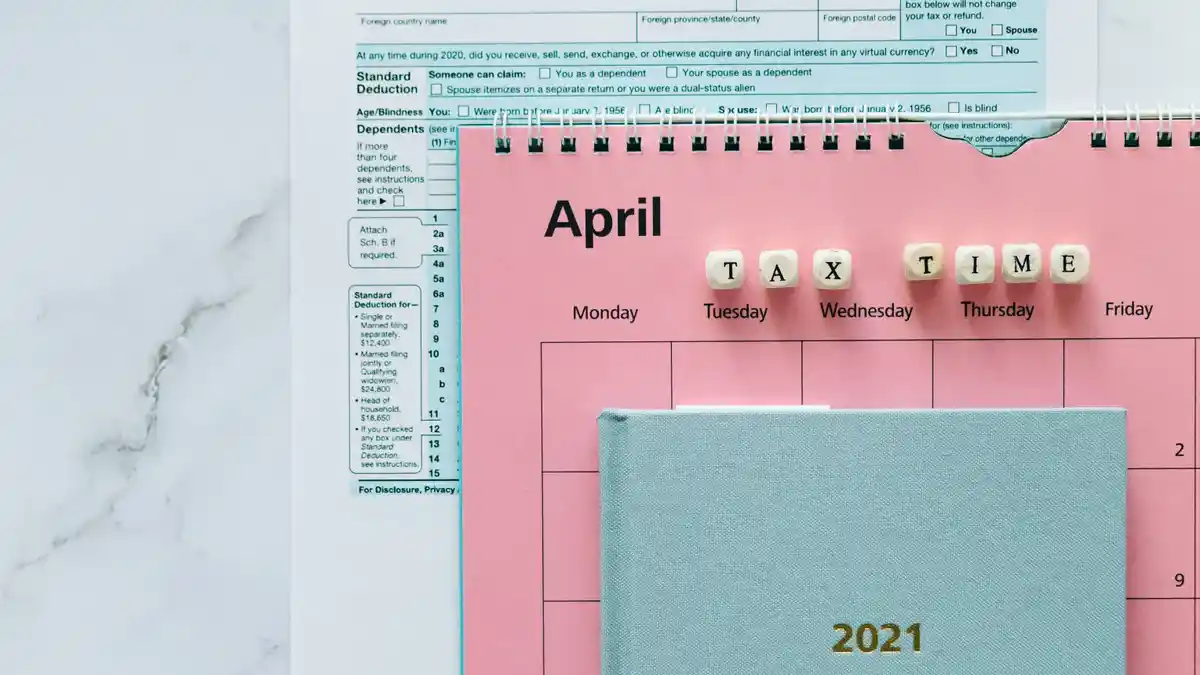
Three checks come first: a verified minimum-payment list, a basic reserve target, and a calendar that shows when income usually falls. Without those, a “pay it down faster” plan can backfire by creating late fees, overdrafts, or a forced return to borrowing.
Start with your debts. For each one, confirm the minimum payment, due date, and whether the lender applies any extra payment to principal immediately or parks it for the next cycle. That detail matters because some systems are set up to hold a payment as a future installment unless you instruct otherwise. If you are unsure, read the lender’s payment instructions or ask them directly in writing.
Then look at the months ahead. A seasonal income budget needs at least one full cycle of the slow season in view, and 12 months is better if your pattern repeats annually. If you can only see the next paycheck, you are not planning seasonally yet.
The reserve account should also have a clear purpose. If it is meant to protect debt payments, do not raid it for nonessential spending. If it is meant to hold off-season bills, write those bills down. A reserve account without a labeled job gets emptied by ordinary temptation.
For a second framework, the Consumer Financial Protection Bureau explains budgeting and debt management tools on its site, and the Financial Planning Standards Board describes the role of a qualified planner. Those are not substitutes for your own numbers, but they are useful references when you want a second framework to compare against.
What mistakes people actually make with seasonal income
The most common mistake is paying too much in the first good month. That feels productive, but it can leave you short in month 2 or 3. Usually, the result is a late fee, a returned payment, or a new balance on a card. Better to cap the extra payment and leave room for the next slow stretch.
Another mistake is treating the reserve account like overflow cash. Once the balance looks large, people start spending from it for irregular purchases that were never in the plan. The result is a false sense of security and a debt payment that collapses later. If this sounds familiar, pause and review the plan with a qualified adviser. A named reserve purpose and a transfer rule you do not break work far better.
A third error is ignoring due dates because “the season is about to turn.” Timing still matters. A payment that arrives five days late can cost more than it saves in interest savings. Anchor every minimum payment to the earliest due date in the month.
A fourth mistake is assuming every extra dollar should go to the highest-interest balance immediately. That can be sensible in some plans, but seasonal cash flow adds another constraint: liquidity. Strip the reserve too far, and a mathematically neat choice becomes a practical mess. Protect cash flow first, then attack principal.
A fifth mistake is failing to separate planned extra payments from planned living costs. People often look at a strong August and call it “extra” when part of that money is already needed for school supplies, insurance renewals, or winter heating. The result is underfunding the slow season. List irregular expenses in the 12-month map before you label anything surplus.
When the standard seasonal plan does not apply
The standard plan does not apply when income is seasonal in name only but unpredictable in practice. If months can swing wildly with no reliable pattern, a seasonal income budget will not stabilize the debt plan on its own.
Your income drops by more than you can map in advance: The next season is too uncertain for a fixed annual schedule — use a more flexible cash-flow plan and get qualified financial help.
Your debts already require frequent late payment relief: The floor payment is below what the current debt load can support — pause extra principal and address the payment problem first.
Your reserve account would take longer than one season to rebuild: The buffer is too thin for aggressive debt acceleration — reduce extra payments until the reserve can survive one slow period.
Your lender applies payments in a way that is unclear: Extra payments may not reduce principal when you expect — confirm the lender’s allocation rules before sending more.
You rely on credit cards to bridge normal monthly expenses: Debt reduction and cash-flow repair are competing goals — prioritize keeping current and stop using the plan as if it were surplus-income budgeting.
A major tax bill, insurance premium, or contract change is due within 30 to 60 days: The year-end picture is already changing — fold that obligation into the seasonal map before making another extra payment.
Should seasonal workers make larger payments during busy months?
Yes, but only after the slow season is funded and the larger payment will not force future borrowing. A bigger payment in a busy month works best when it is part of a prewritten plan, not a one-time burst of enthusiasm. The number should come from the annual budget, not from the mood of the month.
The practical limit is cash flow, not motivation. If a larger payment drains the reserve account below the amount needed for the next 1 to 3 months of obligations, the payment is too large. If the payment still leaves the next slow season fully funded, it is usually the right use of surplus income.
This is where a seasonal income budget helps more than a month-by-month mindset. It lets the reader see that the “extra” money is only extra if the next quarter is already protected. That is the difference between steady acceleration and a temporary speed-up.
How do you budget debt payments during off-season months?
Budget off-season debt payments by treating the reserve account as the source of stability, not by improvising each due date. The off-season budget should already be funded before income drops, with the minimum payments assigned first and discretionary spending left to whatever remains.
The cleanest version is simple: income goes into checking, a planned amount moves to the reserve, and debt payments come out on schedule. If the reserve falls below the amount needed for the next 60 to 90 days, the off-season budget is too loose. If the reserve survives the entire slow period and still has a cushion, the plan worked.
The trade-off is obvious: a stricter off-season budget leaves less room for spontaneity. That is the price of avoiding payment stress when income is lowest.
How to tell if the plan is working
The plan is working if, over a full seasonal cycle, three things happen: minimum payments stay on time, the reserve account does not hit zero before income recovers, and extra principal payments happen in at least some busy months without creating a later shortfall. That is the real measure, not whether one month felt tight.
A good result is not “I paid the most I could in July.” A good result is “I knew what July was for, and October still worked.” After one 12-month cycle, that is the test.
FAQs
How do you budget debt payments during off-season months?
Start with the minimum payment floor. The reserve account covers the gap between lower income and fixed debt due dates. After that, cut or pause extra principal, but keep the payment schedule intact unless a lender has approved a different arrangement.
Should seasonal workers make larger payments during busy months?
Yes, if the larger payment does not weaken the next slow season.
Drafted with AI; not yet reviewed by a person.