Last updated: August 10, 2026
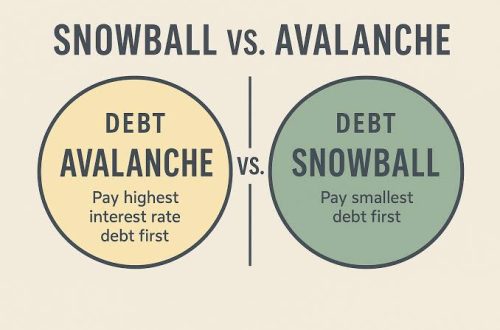
- The debt avalanche ranks debts by interest rate, highest first, and attacks them in that order.
- Mathematically, it’s the optimal sequencing strategy — no other fixed ordering produces lower total interest on the same debts.
- The largest gains appear when the rate gap between your worst and best accounts is wide (e.g., a 24% credit card versus a 9% personal loan).
- The debt snowball (smallest balance first) typically costs more in total interest but closes accounts faster, which can preserve motivation.
- A completed snowball beats an abandoned avalanche — psychological fit matters as much as arithmetic.
- Always meet every minimum payment before directing extra funds; missing a minimum on a secured debt carries consequences that no interest calculation captures.
- Consult a qualified financial adviser before restructuring debt repayment, especially where secured debts, hardship, or 0% promotional periods are involved.
Carrying balances on multiple accounts and want to pay the least possible interest over time? The debt avalanche method is the mathematically correct answer — and that’s not a promise, it’s arithmetic. Simple in structure, genuinely effective for the right person, and genuinely wrong for the wrong one.
This article explains how the debt avalanche works and helps you decide whether it fits your situation. It is information, not financial advice. Rates, rules, and thresholds vary by country and change over time; speak with a qualified financial adviser before making decisions about your own debt.
What the Debt Avalanche Method Actually Is
One rule governs the debt avalanche: after meeting all your minimum payments, throw every spare dollar at the account with the highest interest rate first. When that balance reaches zero, redirect those payments to the next-highest-rate account. Repeat until everything is gone.
That’s it. The name comes from attacking from the top — the steepest, most damaging rate — and working down from there.
The logic is sound. Interest accrues on your outstanding balance, which means a high-rate account costs you money every single day it carries a balance. Eliminating it first shrinks the total interest that builds before you’re debt-free. Wider rate differentials between accounts produce more pronounced savings — the math on that stops working in the snowball’s favour pretty fast once the gap widens.
The method does not cover: how much extra to pay, where the money comes from, or what to do with irregular income. Those are separate problems entirely.
The Real Difference Between the Debt Avalanche and Snowball
Dave Ramsey popularized the debt snowball — pay off your smallest balance first, regardless of rate. Quick wins, accounts clearing fast, motivation staying high. Hard to argue with the psychology of it.
On the same set of debts, though, these two methods can produce meaningfully different financial outcomes.
| Criteria | Debt Avalanche | Debt Snowball | Advantage |
|---|---|---|---|
| Total interest paid | Lower | Higher (usually) | Avalanche |
| Time to first paid-off account | Longer (often) | Shorter (often) | Snowball |
| Motivation mechanics | Delayed gratification | Rapid early wins | Snowball |
| Math efficiency | Optimal | Sub-optimal | Avalanche |
| Works when rates are similar | Marginal benefit | Same result | Tie |
| Works when rates differ sharply | Large savings | Leaves money on table | Avalanche |
| Suits analytical personality | Yes | Less so | Avalanche |
| Suits motivation-driven personality | Less so | Yes | Snowball |
| Requires tracking multiple rates | Yes | No | Snowball |
Honestly, the summary comes down to this: trust the process, know your numbers, and stay committed to hammering a large high-rate balance while a smaller account sits untouched — and the avalanche will almost certainly cost you less. But discipline is the variable at risk here. An optimal plan you abandon is worth nothing; a slightly sub-optimal plan you actually follow beats it every time.
Who the Debt Avalanche Method Helps Most
The avalanche is built for a specific kind of person — someone who has absorbed a genuine interest-rate gap between their accounts, knows the numbers cold, and can stay committed to a plan even when months pass before the first account closes.
The profile that benefits most:
- You carry high-rate debt (credit cards, payday loans, personal loans with steep rates) alongside lower-rate debt (a car loan, a student loan, a 0% promotional balance).
- The rate gap between your worst and best accounts is wide — several percentage points at minimum.
- You track your finances regularly and won’t lose the thread of the plan between statements.
- Your income is stable enough to commit a fixed extra amount each month.
- Numbers motivate you — watching the total interest-remaining figure shrink keeps you going.
Widen that rate differential, and the avalanche earns its keep more decisively. A 24% card sitting beside a 9% personal loan is bleeding money every month it stays alive; no other sequencing approach stops that bleeding faster. For a broader look at how interest compounds across account types, the Consumer Financial Protection Bureau’s debt repayment resources are a useful reference point.
Who Should Skip It (Honest Conditions Where It Fails)

Given those strengths, the avalanche can look like the obvious call — but its weakness is psychological, and that weakness is real. Fully paying off the first account can take a long time, especially when the highest-rate balance is also large. Months of extra payments with nothing visibly closing can feel like standing still on a treadmill.
Skip the avalanche if:
- Your primary risk is abandoning the plan. Tried structured payoff plans before and quit? The motivational architecture of the snowball may serve you better. A slightly sub-optimal plan you follow beats an optimal one you don’t.
- Your highest-rate debt also carries the largest balance by a wide margin. A year or more before that account closes is a long time — most people dramatically underestimate how long that feels in practice.
- Your income varies substantially month to month. The avalanche assumes a consistent extra payment. Zero-extra months slow the method dramatically and can feel discouraging, even when they’re not your fault.
- Rates are similar across all your accounts. A narrow gap between highest and lowest rate shrinks the mathematical advantage to near-irrelevance; at that point, the snowball’s psychological benefits may outweigh the marginal interest savings.
None of this rules out the approach permanently. Honest self-assessment before committing is what it demands.
How to Set One Up: The Mechanics Without the Jargon
An afternoon and a spreadsheet — or even a piece of paper — is all the setup required.
Step one: List every debt. Write down each account, its current balance, its interest rate, and its minimum monthly payment. Three numbers per account. No shortcuts here.
Step two: Sort by interest rate, highest to lowest. This is your order of attack. The account at the top is your target.
Finding your extra payment comes next. Look at your monthly cash flow and identify how much you can send above the minimums. Even a small fixed amount works — consistency matters more than size. Unsure how to find that room? Our guide to budgeting for debt repayment walks through the process.
Step four: Pay minimums on everything, extra on the top account. Every month: minimums across the board, full extra payment to the highest-rate debt.
Once the top account hits zero, roll its payment down. The minimum you were paying on that account, plus the extra you were sending — all of it moves to the next account on the list. Each closed account increases the payment hitting the next one; the cascade builds on itself.
Your effective payment grows with each account you close, even with a flat total budget. That compounding momentum is the engine of the whole strategy.
One practical note worth confirming before you start: verify that your lender applies overpayments to principal rather than to future interest or future minimum payments. Most reputable lenders do — well, usually — but the application of extra payments can vary by servicer and country, particularly for mortgages and some student loans.
A Worked Example That Shows the Trade-Off Plainly
Three debts illustrate how the cascade plays out:
- Card A: balance of $4,000, rate of 24%
- Card B: balance of $1,500, rate of 15%
- Personal loan: balance of $6,000, rate of 9%
Card A gets attacked first under the avalanche — despite Card B being smaller and faster to close. The snowball would clear Card B first for the quick win.
So what does the snowball choice actually cost? Every month spent clearing Card B’s 15% balance is a month Card A’s 24% balance keeps accruing. The exact dollar figure depends on your minimums, your extra payment, and precise payment timing — so rather than cite a fabricated number, the logic stands on its own: the longer a 24% balance sits untouched, the more expensive that decision becomes. Widen the rate gap, and the avalanche’s advantage grows proportionally. Model your own numbers using the Bankrate debt payoff calculator.
When to Reconsider the Choice Entirely
Even a well-constructed avalanche plan can be the wrong starting point. Several situations exist where neither method should be your first move.
Emergency fund first. No liquid reserves means one unexpected expense sends you straight back to the credit card the moment you’ve paid it down. Most financial planners suggest a small cash buffer before aggressive debt payoff — the right size is personal and depends on income stability, obligations, and risk tolerance. An independent financial adviser can help you set a sensible number.
Once that buffer is in place, the avalanche structure can proceed without the risk of being immediately unwound by a surprise cost.
Promotional 0% periods. A balance sitting on a 0% promotional account needs a specific adjustment: the rate it converts to after the promotional period ends — often 20% or higher — may put it at the top of your list before the promotion expires. Model the expiry date before assuming your sorted order is static. For sequencing purposes, treat the post-promotional rate as the effective rate, not the current 0%.
Secured vs. unsecured debt priority. The avalanche assumes all minimums are covered. When cash flow is tight enough that covering every minimum isn’t possible, the question of which payments to prioritise moves well beyond a rate-sorting exercise. Consult a qualified financial adviser or a nonprofit credit counsellor before deciding which obligations to deprioritise. The consequences of missed payments differ substantially between debt types, and they vary by jurisdiction and lender.
Specifically: missing a minimum on a secured debt — a mortgage, a car loan — can trigger foreclosure or repossession. Those outcomes represent a categorically different order of harm than accruing extra interest on an unsecured account; no interest-rate calculation captures them. Approaching this situation? Seek professional guidance promptly — an independent financial adviser or nonprofit credit counselling service can outline your options. (The National Foundation for Credit Counseling offers a counsellor locator for U.S. residents.)
The Verdict: Choose the Avalanche If These Are True
A meaningful interest-rate gap between accounts, stable income, and the discipline to stay the course without an early account closure — those three conditions together make the debt avalanche the right call. Less total interest than any other sequencing method: not an opinion, just the math.
Conversely, choose the debt snowball when the psychological lift of quick wins is what keeps the plan alive. A plan you maintain is always superior to a plan you abandon.
Choose neither as a rigid script when your situation includes secured-debt risk, 0% promotions expiring soon, or income too irregular to commit a consistent extra payment. In those cases, a structured conversation with a financial adviser is worth more than any repayment framework found in an article. Our debt repayment strategies overview also covers how the avalanche fits into a broader plan.
The avalanche is a tool. Like any tool, it performs best in the hands of someone who understands its design — and who knows when a different tool fits the job.